Look at the filling, not just the timer
When you move the filling aside with a spatula, there shouldn’t be a puddle of liquid left behind. The mixture should still look moist, but it shouldn’t be swimming in its own juices. If it’s too wet, keep cooking and stirring before adding more thickener.
Once the pork and shrimp are fully cooked, let a small spoonful cool enough to taste. Adjust the seasoning before wrapping, remembering that the dipping sauce will bring its own flavor to the finished bite.
Roll one before committing to the rest
Start with one roll to check how much filling your wrapper can comfortably hold. It should close neatly without stretching or tearing. Use that first roll as your guide so the rest are similar in thickness and fry more evenly.
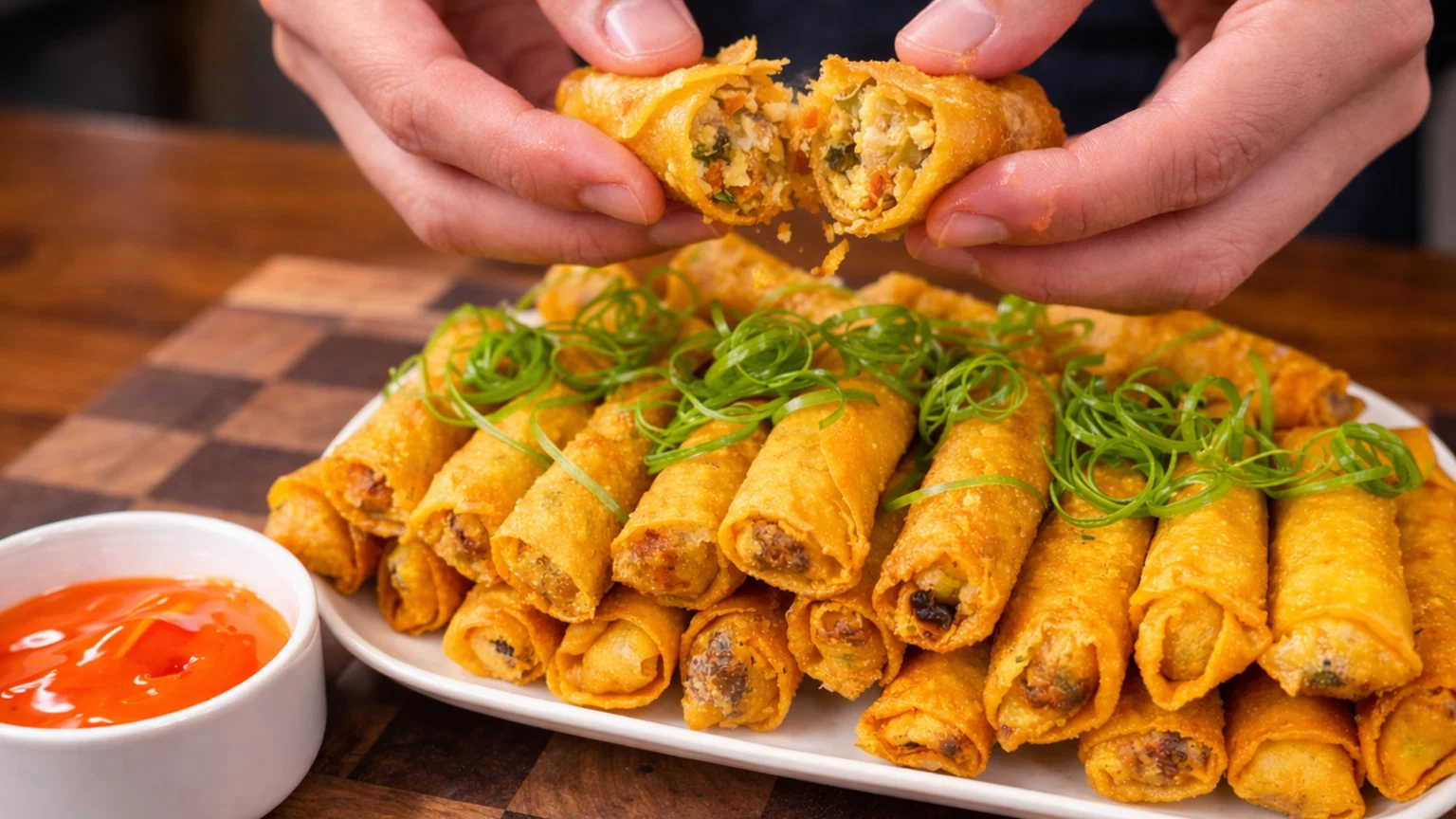
Why are the wrappers yellow?
A lot of you have asked about the yellow wrappers in the video. These are common here in Iloilo! The yellow color typically comes from added food coloring, although ingredients can vary by maker.
You don’t need yellow ones to make this recipe. Thin, plain lumpia wrappers intended for frying are suitable too. If you’re curious about what gives your wrappers their color, check the packaging or ask the seller.
Vinegar finishing tip
In this recipe, I add a few drops of white vinegar near the end of frying. In my experience, this helps make the lumpia crispier and keeps it crunchy for longer. I want to emphasize that only a few drops are used. Too much can cause vigorous bubbling and make the oil overflow.
This step is optional. Vinegar contains water, so even a few drops can cause hot oil to spit or splatter. Never pour it directly from the bottle into the pan, and don’t increase the amount when making a larger batch. You can skip this step and follow the other tips for managing moisture, frying, and draining.