Pork Giniling
Watch the full recipe

See every step.

Play the complete Kubo Cooks video directly on this page.

Player not loading? Watch on YouTube ↗

Discover the dish

About Pork Giniling

Pork giniling is a familiar Filipino dish made with ground pork and vegetables in a tomato-based sauce. Household versions vary, with additions such as peas, raisins, bell peppers, or boiled eggs.

This version starts by lightly browning the pork and using its rendered fat to sauté the garlic and onion. Potatoes and carrots make it more filling, while green peas and optional sweet corn add color and a little sweetness. Hard-boiled eggs complete the dish, with one for each serving.

The Kubo Cooks method

Why This Recipe Works

Cooking the pork first releases its fat and allows some browning before the sauce goes in. That rendered fat carries the flavor of the garlic and onion through the dish without needing extra oil unless the pork is particularly lean.

Small, evenly diced vegetables cook more predictably and mix well with the ground meat. A covered simmer gives the potatoes and carrots time to soften without letting the sauce dry out too quickly.

The broth cube, soy sauce, and oyster sauce build a savory base around the tomato sauce. Tasting near the end helps account for the saltiness of these ingredients as the sauce reduces.

Green peas and optional corn only need a short final cooking. Adding the boiled eggs at serving keeps them intact and makes portioning easier.

What to know

Ingredient Notes

Ground pork
Choose pork with a little fat for flavor and moisture. Very lean pork may need a small amount of oil when sautéing the aromatics.
Garlic and onion
Mince the garlic and dice the onion so they mix easily with the ground pork. Cook the garlic until fragrant without letting it burn.
Pork broth cube
Adds concentrated seasoning. Crumble it well so it dissolves evenly, and account for its saltiness before making the final seasoning adjustment.
Soy sauce
Adds salt and a little color. If using salt instead, add gradually to taste rather than replacing the soy sauce measure for measure.
Oyster sauce
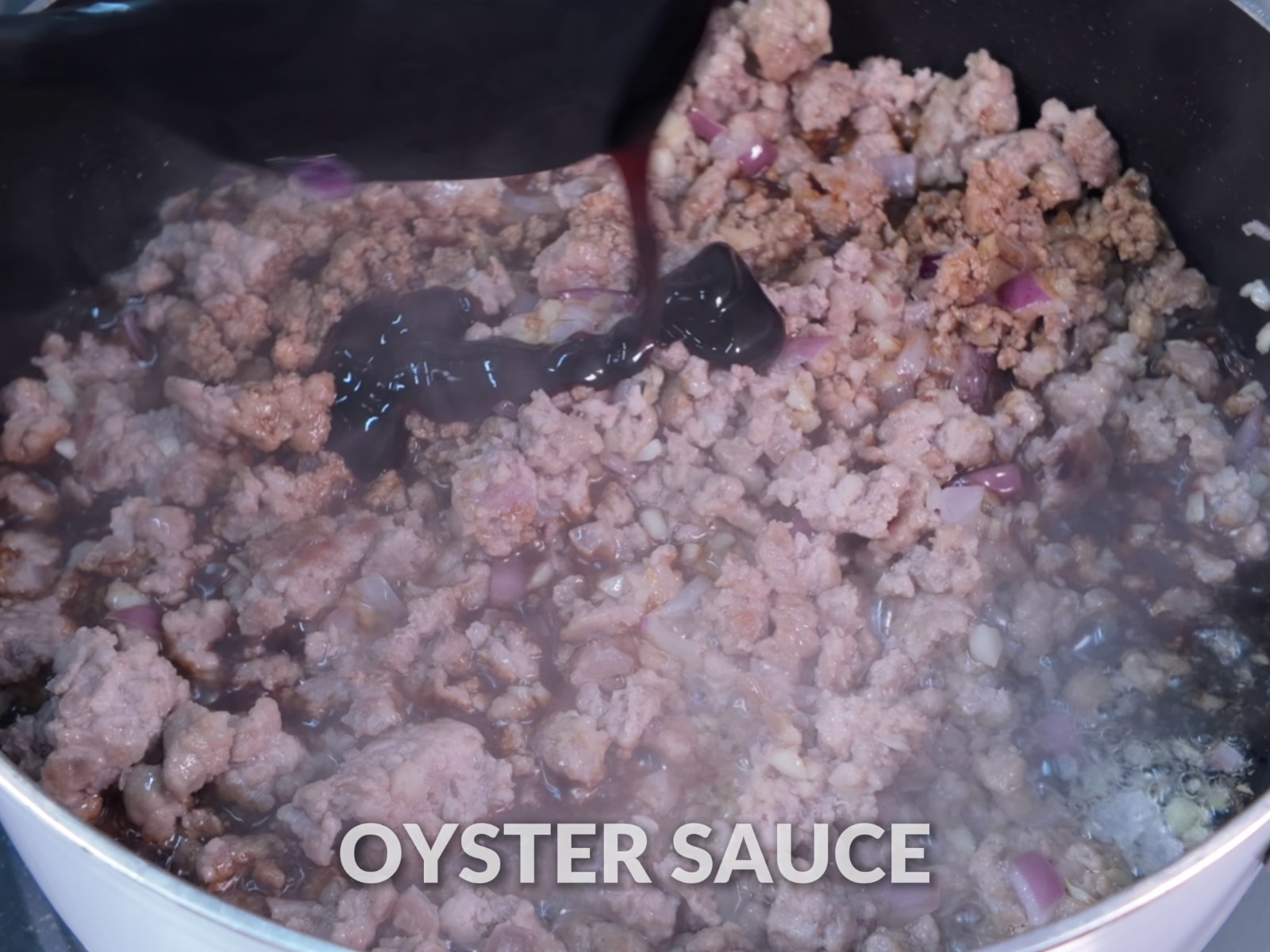
Adds savory flavor and a little sweetness. Brands differ in saltiness and thickness.
Tomato sauce
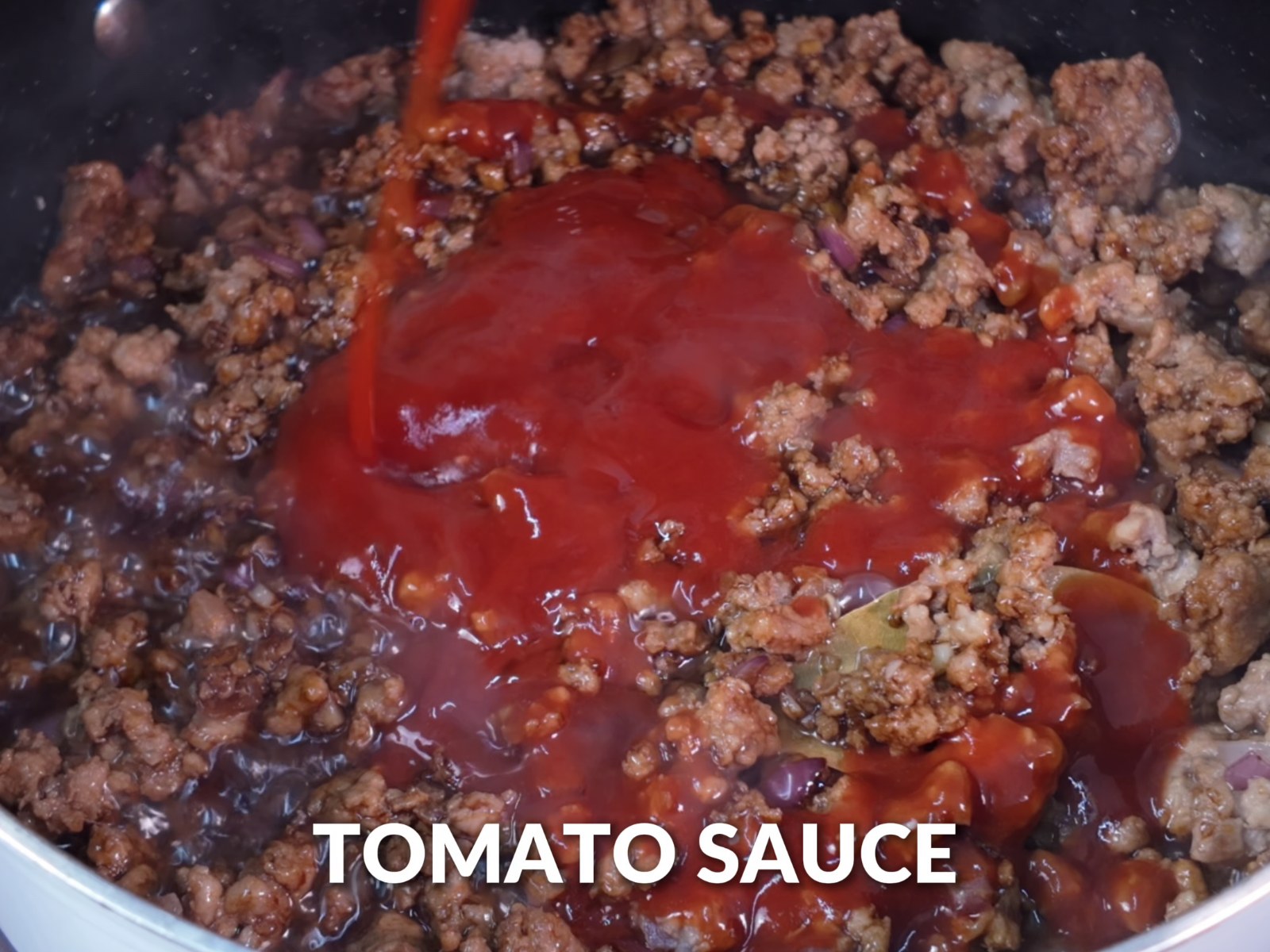
Use plain tomato sauce rather than ready-seasoned spaghetti sauce, which can change the sweetness and flavor.
Carrots
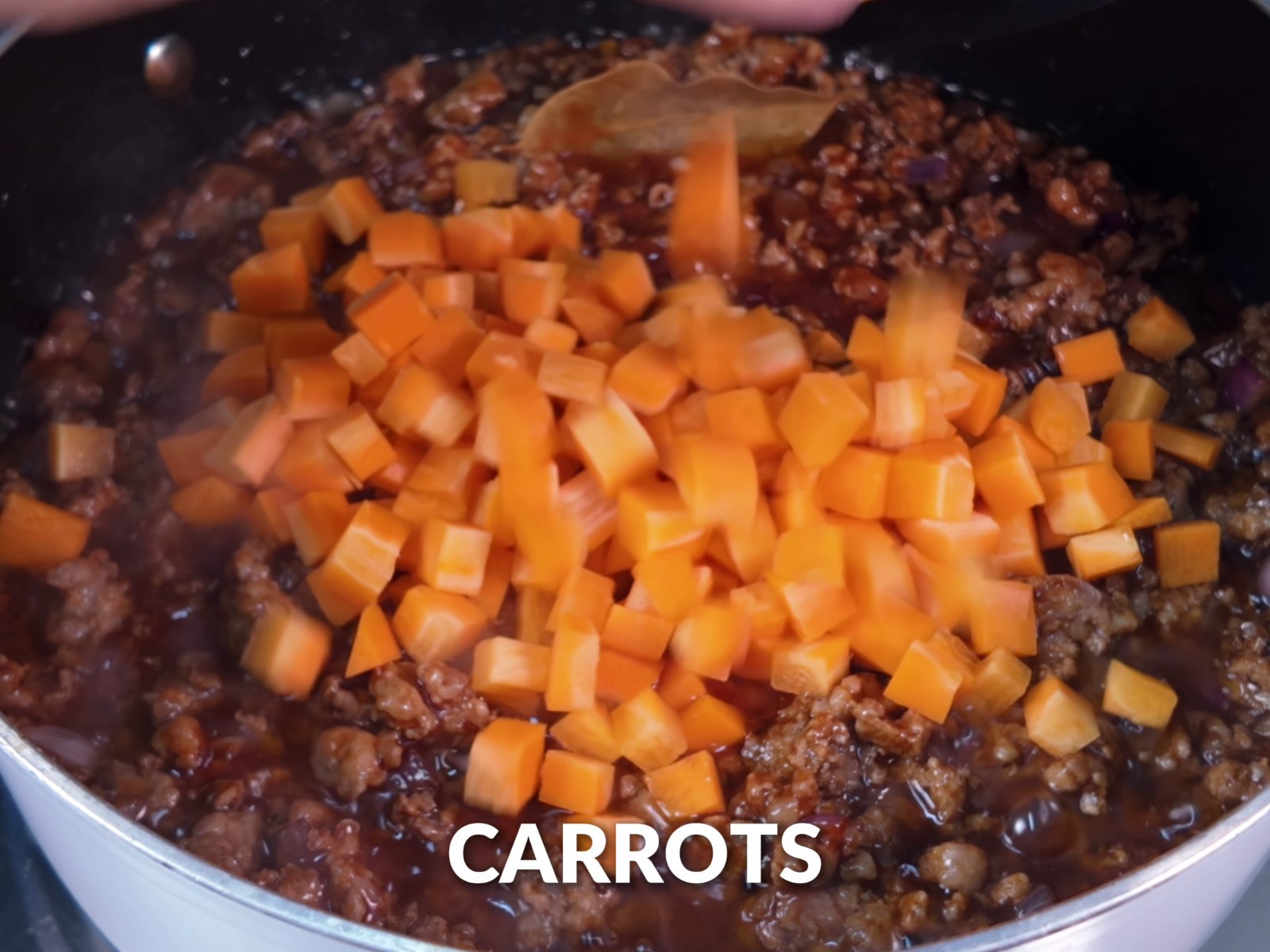
Dice into small, even pieces so they soften during the simmer and fit comfortably on a spoon.
Potatoes
Cut into similarly sized cubes. Check a piece with a fork before finishing the dish; it should be tender through the center.
Water
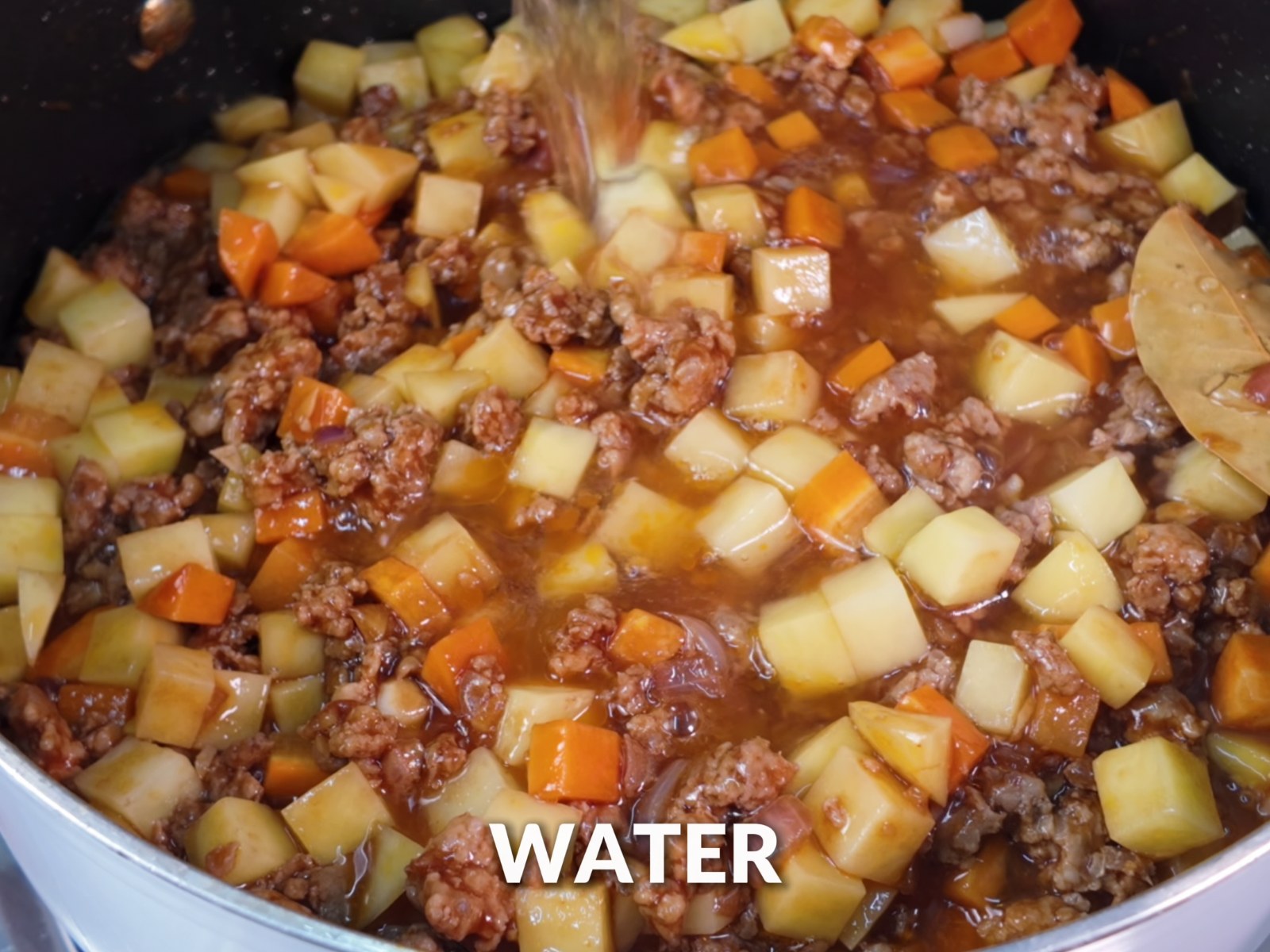
Helps the vegetables cook and controls the sauce’s consistency. Start with the listed amount and add more only as needed.
Green peas
Frozen peas can go straight into the pan. If using canned peas, drain them first and stir gently because they are already soft.
Sweet corn
Optional. Adds little pockets of sweetness and texture; drain canned corn before adding.
Hard-boiled eggs
I only used two eggs in the recipe video because that’s what we had on hand. The written recipe uses five, allowing one per serving, but you can use fewer if you prefer.
Bay leaf
Optional. Adds a subtle aroma during simmering; remove it before serving.

Make it your own

Substitutions

Ground pork
Use ground beef, ground chicken, or a pork and beef mix. Leaner meat may need a little oil for sautéing.
Pork broth cube
Use a chicken or beef broth cube, adjusting the seasoning to taste. You can also omit it and adjust the dish with the other seasonings.
Soy sauce
Use salt to taste, adding it gradually.
Green peas
Omit them or replace with additional sweet corn.
Sweet corn
Leave it out if you prefer a less sweet version, you can also use raisins for that burst of sweetness instead.
Hard-boiled chicken eggs
Use peeled hard-boiled quail eggs, or omit the eggs.
Bay leaf
Leave it out if unavailable.
Pork Giniling process photo 1
Pork Giniling process photo 2
Pork Giniling process photo 3
Gallery photos 1–3 of 11
From my kitchen

Kubo Cooking Notes

Give the pork time to brown

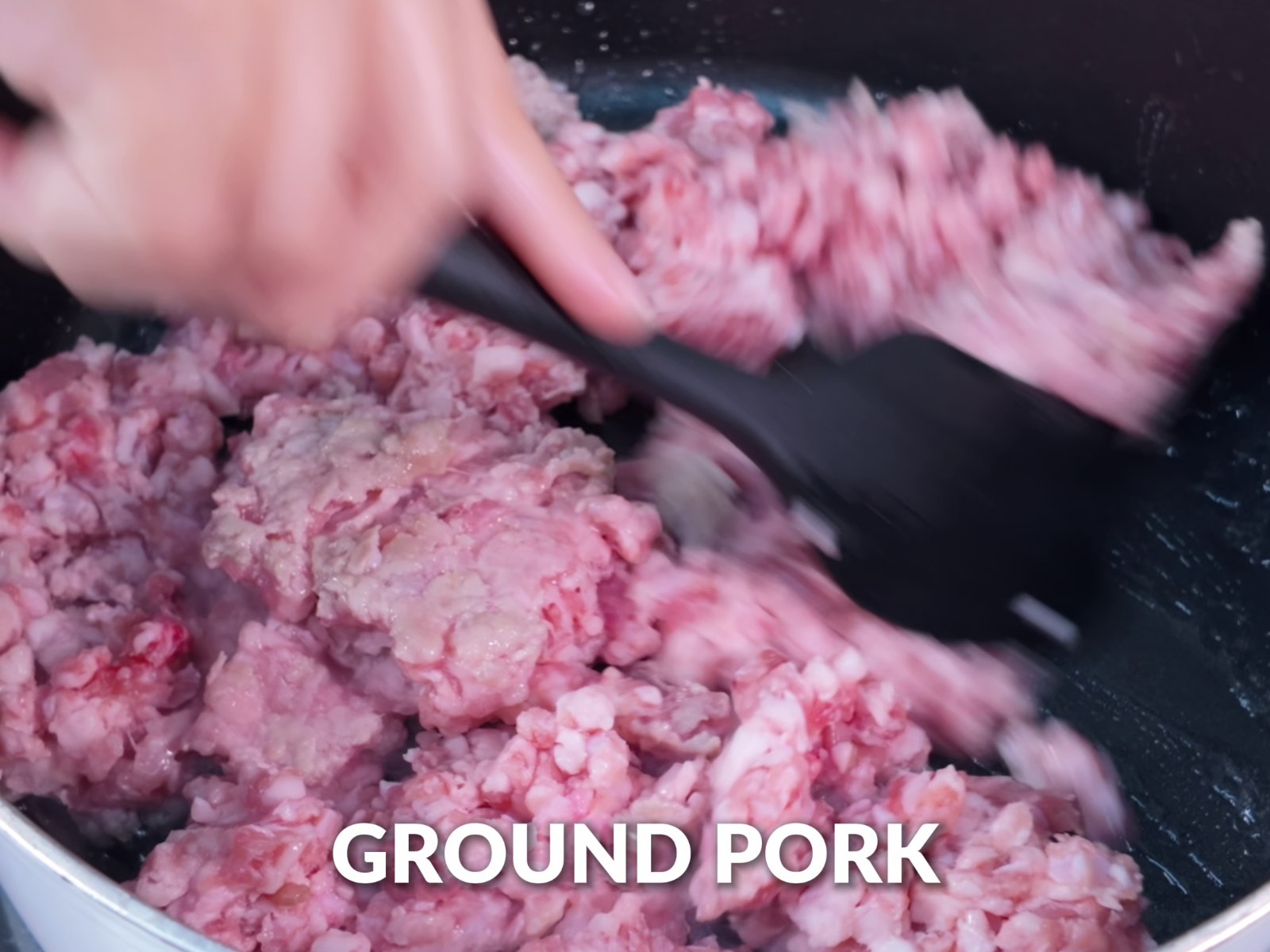
Ground pork often releases water before it begins to brown. If liquid collects in the pan, let it evaporate before expecting much color.

Break up large clumps as the pork cooks, then let it sit briefly between stirring so it has a chance to brown. Light browning is enough; there is no need to fry the meat until dry.

Keep an eye on the garlic

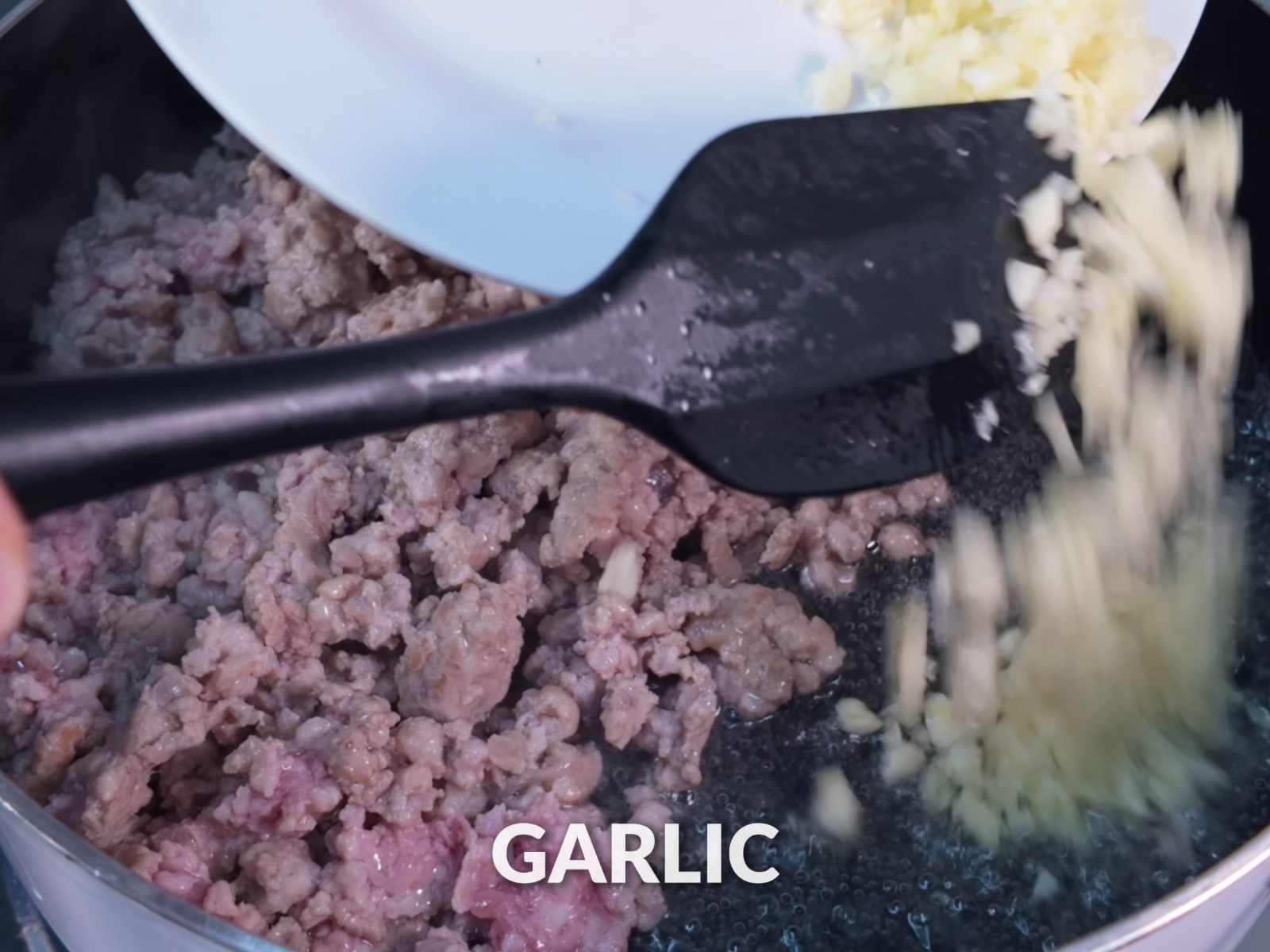
Once the pork is pushed aside, the exposed part of the pan can be quite hot. Lower the heat if needed before adding the garlic.

The garlic should become fragrant and lightly colored. Dark, burnt pieces can leave a bitter taste throughout the sauce.

A spoonable sauce

Giniling should have enough sauce to coat the pork and vegetables without becoming watery. If it dries out before the potatoes soften, add water a little at a time and continue simmering.

If the vegetables are already tender but the sauce is too loose, uncover the pan and let it reduce gently. Stir carefully to keep the potato cubes intact.

Season after reducing

The sauce becomes more concentrated as water evaporates. A mixture that tastes balanced early on can become too salty after a long uncovered simmer.

Make the final seasoning adjustment once the vegetables are tender and the sauce is close to the consistency you want.

Plan ahead

Make-Ahead, Storage, and Reheating

Plan ahead: Cook the giniling a day ahead and refrigerate it promptly in covered shallow containers. Boil the eggs separately and keep them refrigerated until needed. The sauce may thicken after chilling. Loosen it with a small splash of water when reheating.

Store leftovers: Refrigerate leftovers promptly and consume within 3–4 days. Divide a large batch into smaller containers rather than leaving the whole pot on the counter to cool completely. Keep any eggs that have not been added to the dish in a separate covered container.

Freeze: Freeze leftover cooked giniling in meal-sized portions and consume within 2–3 months for the best quality. Freeze without the boiled eggs, as their whites can become rubbery. The potatoes may soften after thawing. Stir gently when reheating and add freshly boiled eggs when serving.
Reheat: Thaw frozen portions overnight in the refrigerator. Reheat in a covered pan over gentle heat, stirring occasionally, until the dish reaches 74°C throughout. Add a little water if the sauce has become too thick. Heat only the portion you need.

Bring it to the table

Serving Suggestions

  • Serve with steamed rice and one hard-boiled egg per portion.
  • Pair with sliced cucumber or tomatoes for something fresh alongside the savory sauce.
  • Serve with sautéed leafy vegetables for a more varied meal.
  • Spoon any extra sauce over the rice and break the egg into it as you eat.

Ingredients

  • 500 g ground pork
  • 4 cloves garlic (about 15 g), minced
  • 1 medium onion (about 100 g), diced
  • 1 pork broth cube
  • 1 Tbsp soy sauce (15 ml), or salt to taste
  • 1 Tbsp oyster sauce (15 ml)
  • 1 bay leaf (optional)
  • 1 cup tomato sauce (240 ml)
  • 1 medium carrot (about 120 g), diced
  • 2 small potatoes (about 250 g total), diced
  • ¾ cup water (180 ml), or as needed
  • ¼ tsp ground black pepper, or to taste
  • ⅓ cup sweet corn (about 55 g, optional)
  • ½ cup green peas (about 75 g)
  • 5 hard-boiled eggs

How to Make It

  1. Place the ground pork in a pan over medium heat. Break it apart and cook for about 7–10 minutes, until the fat renders and the pork is lightly browned.
    View photo
    Place the ground pork in a pan over medium heat.
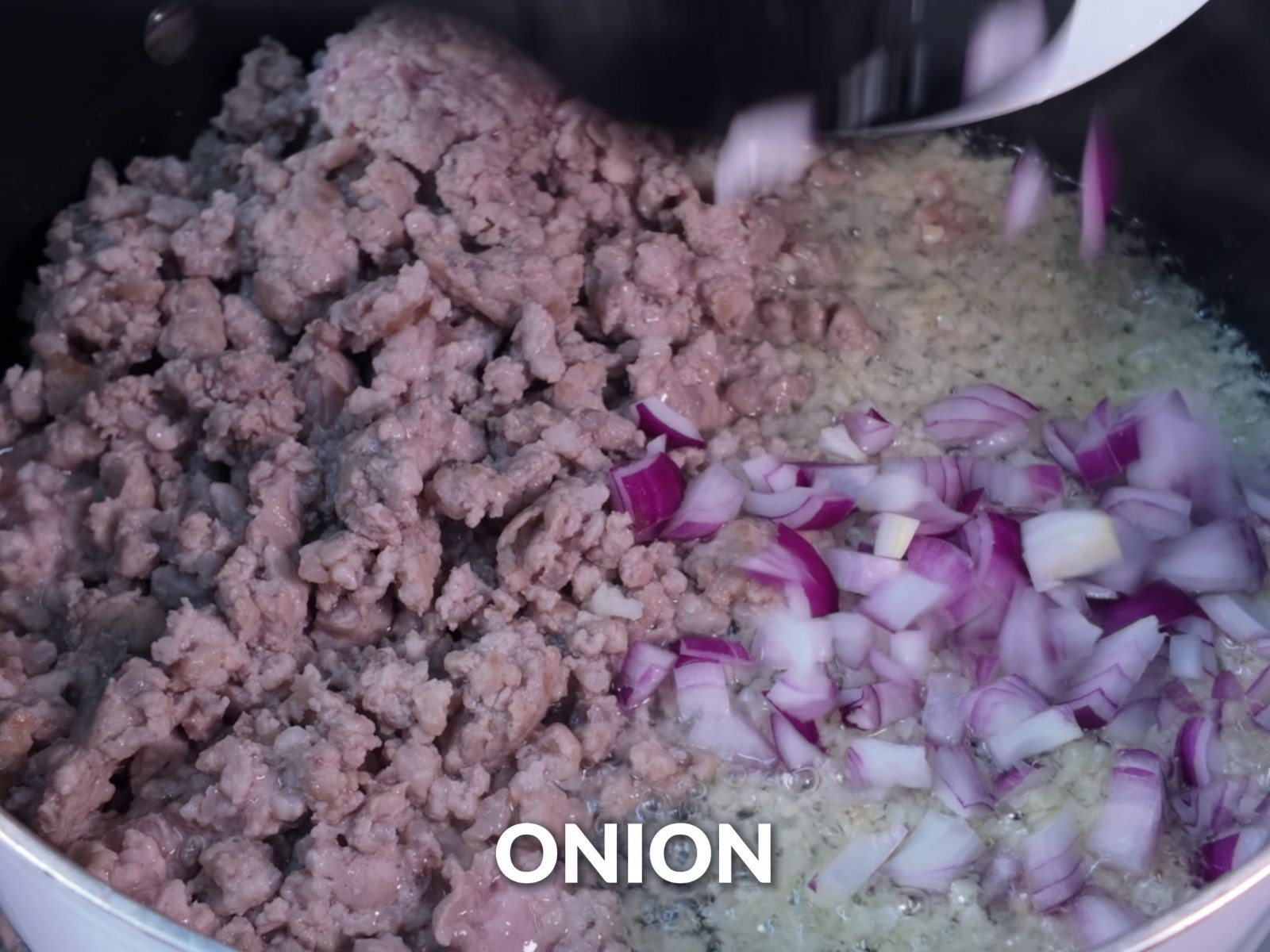
  2. Push the pork to one side. Sauté the garlic in the rendered fat until fragrant, then add the onion and cook until softened. Mix with the pork.
    View photos
    Push the pork to one side.
    Push the pork to one side.
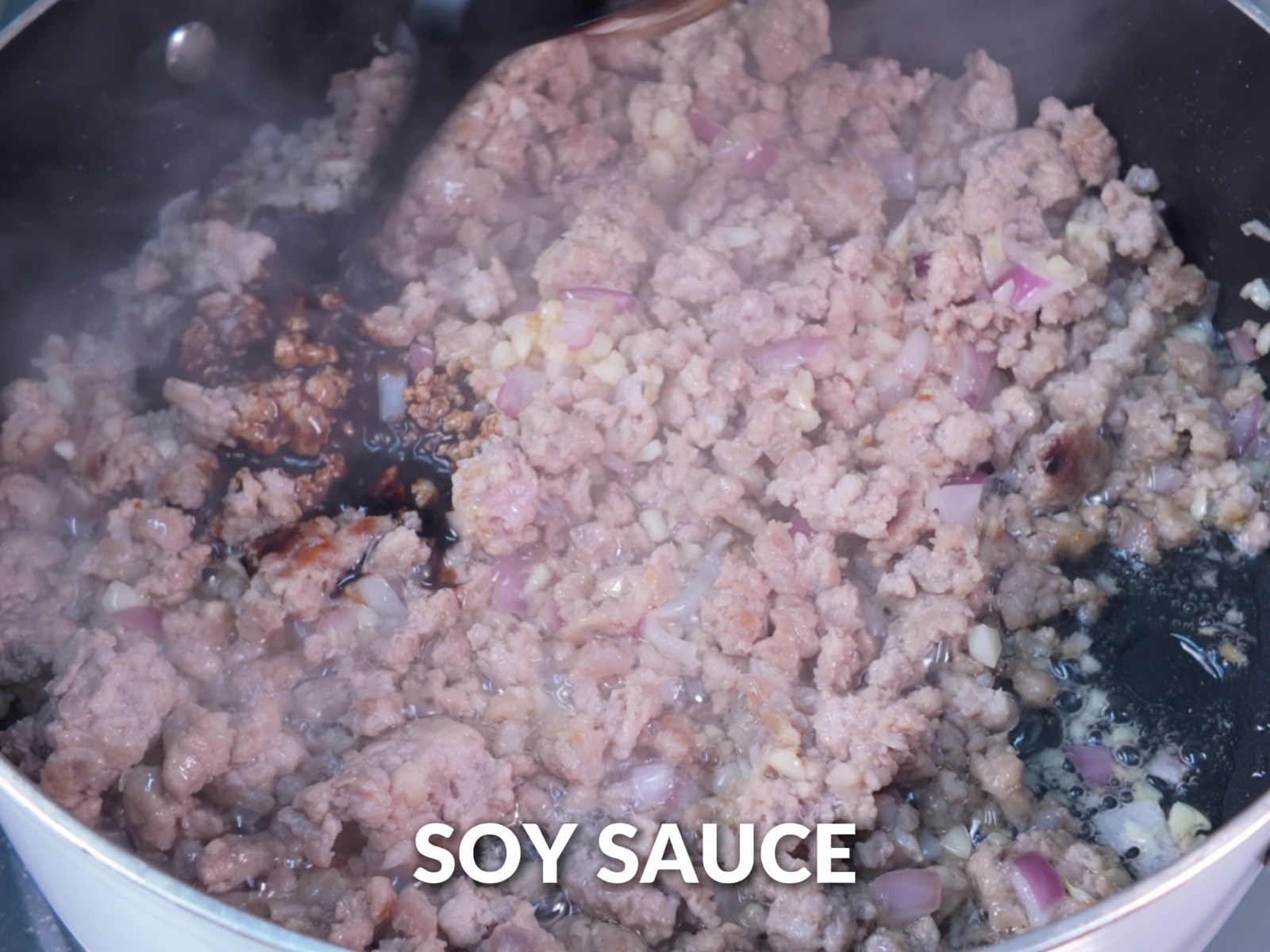
  3. Crumble in the pork broth cube and stir well. Add the soy sauce or salt, oyster sauce, and bay leaf, if using.
    View photos
    Crumble in the pork broth cube and stir well.
    Crumble in the pork broth cube and stir well.
  4. Pour in the tomato sauce, stir, and simmer for about 2 minutes.
    View photo
    Pour in the tomato sauce, stir, and simmer for about 2 minutes.
  5. Add the carrots and cook for 2–3 minutes, stirring occasionally. Stir in the potatoes.
    View photo
    Add the carrots and cook for 2–3 minutes, stirring occasionally.
  6. Add the water and black pepper. Cover and simmer over low to medium-low heat for 10–15 minutes, or until the vegetables are tender and the pork is fully cooked. Add a little more water if needed.
    View photo
    Add the water and black pepper.
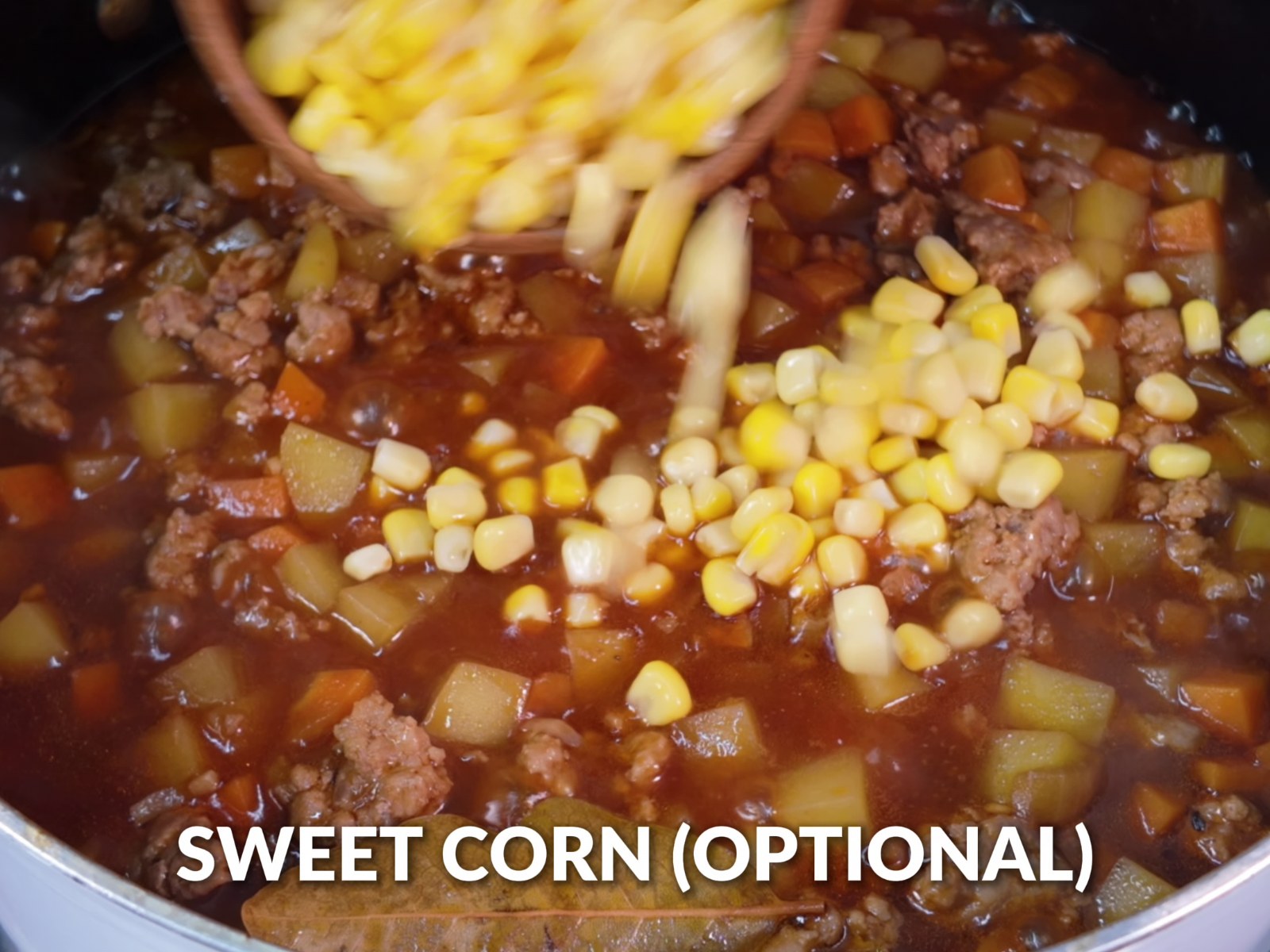
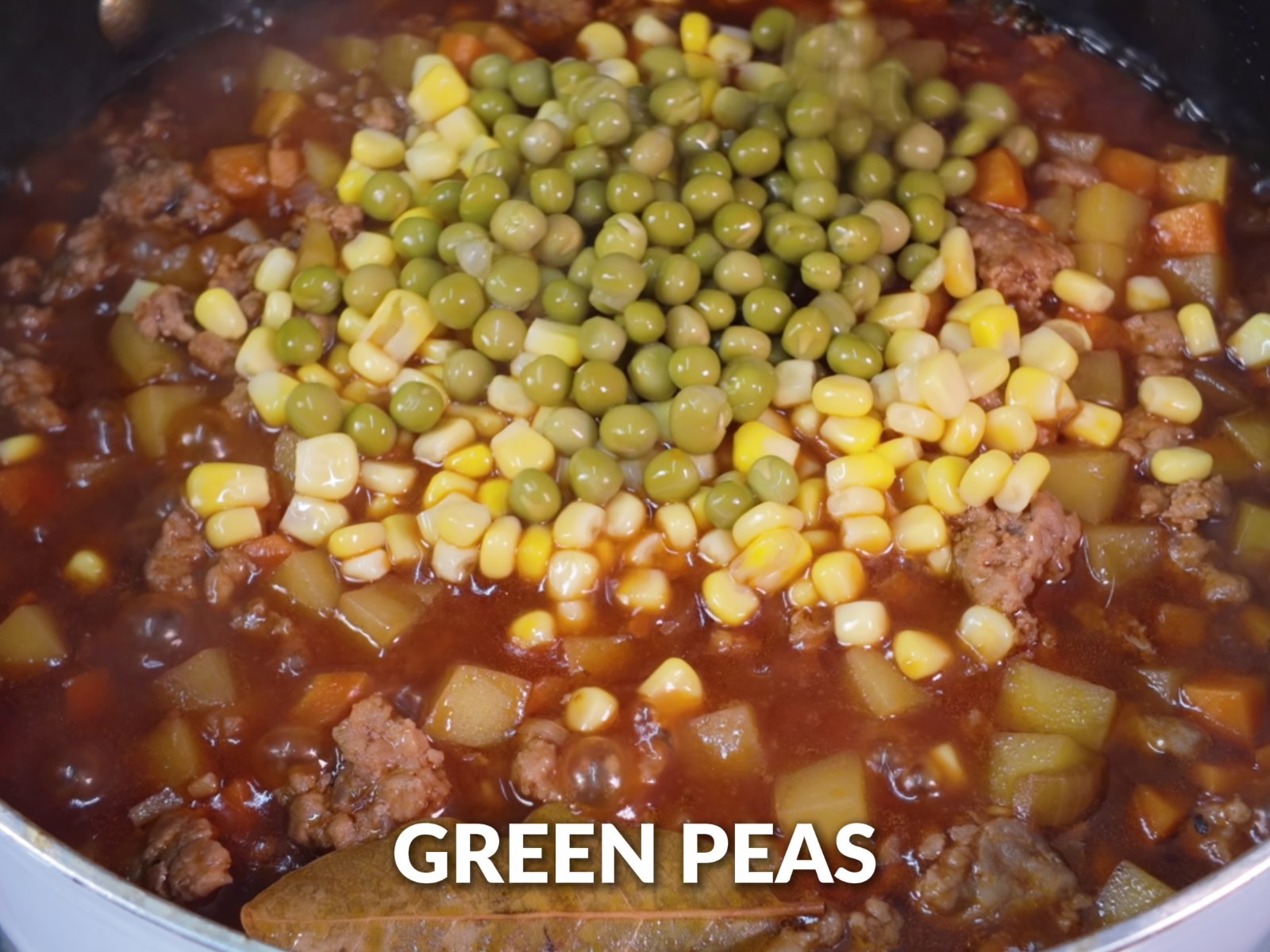
  7. Stir in the sweet corn, if using, and green peas. Cook for another 2–3 minutes until heated through.
    View photos
    Stir in the sweet corn, if using, and green peas.
    Stir in the sweet corn, if using, and green peas.
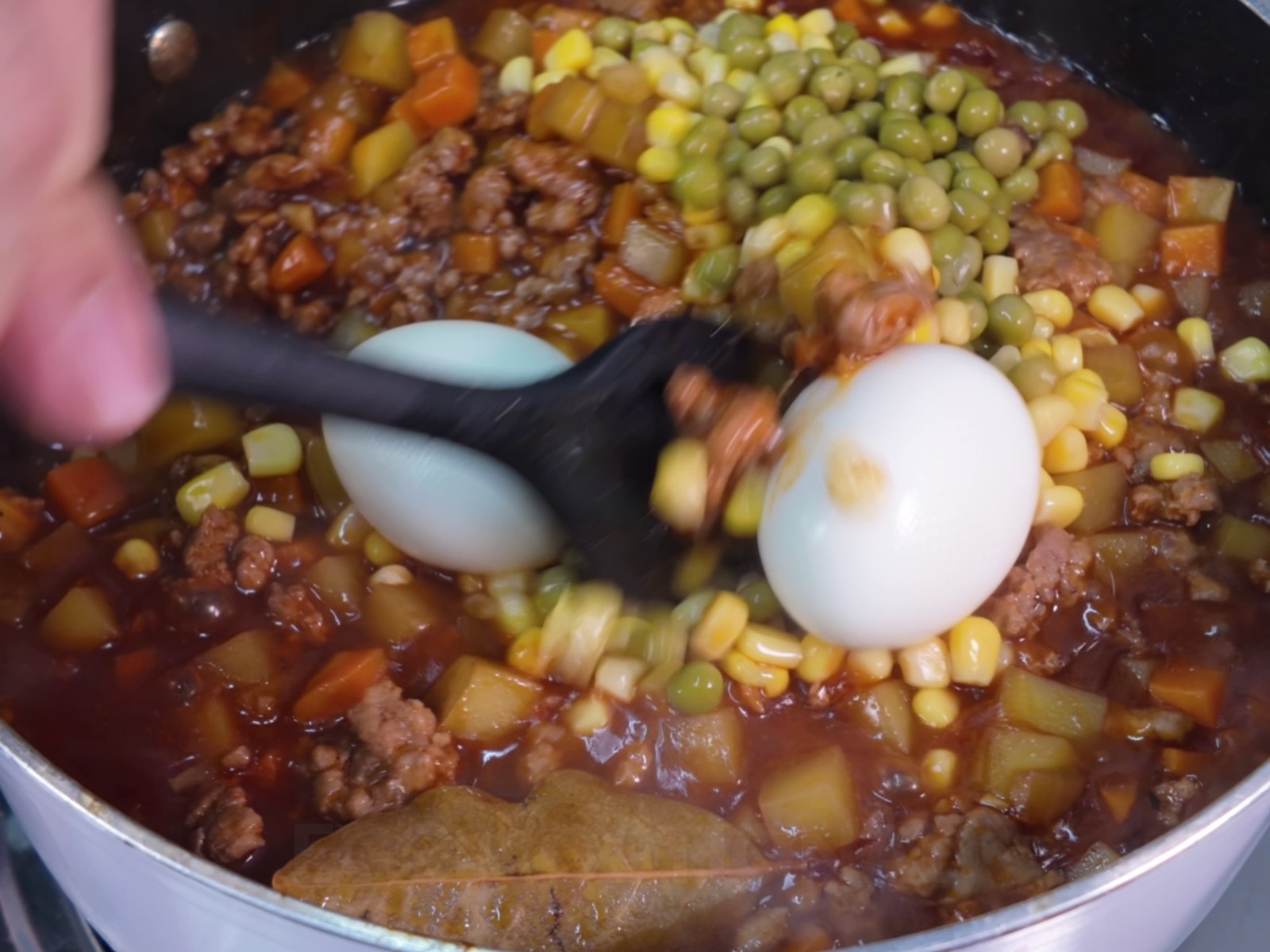
  8. Taste and adjust the seasoning. Remove the bay leaf, then top with the hard-boiled eggs. Serve warm with steamed rice.
    View photo
    Taste and adjust the seasoning.
Kubo Tips
  • Let the pork fat render before sautéing the aromatics. If using very lean pork, add a little cooking oil only if needed.
  • Cut the carrots and potatoes into small, even cubes so they cook at a similar rate.
  • The broth cube, soy sauce, and oyster sauce already add salt. Taste before adding more seasoning.
  • For a thicker sauce, simmer uncovered for a few extra minutes. Add water a little at a time if it becomes too dry.
  • Add the boiled eggs at the end to keep them intact. Peeled, hard-boiled quail eggs work too.