Soaking helps, but tenderness matters more
Soaking the munggo for 30 to 60 minutes can shorten the cooking time and help the beans soften more evenly. It is still possible to cook them without soaking.
The age of the dried beans affects how quickly they soften. Use the listed time as a guide and judge them by texture before continuing with the stew.
Decide what to do with the cooking liquid
The munggo cooking liquid contains starch and dissolved bean solids. Using it creates a thicker, heartier dish with a stronger mung bean flavor.
Drain the beans and use fresh water when you want a lighter broth. You can also combine some cooking liquid with plain water for a consistency between the two.
Give the pork time to brown
Let excess moisture from the ground pork evaporate before adding the garlic and onion. If the pork remains wet, it will steam instead of browning.
Once some fat has rendered and the pork has picked up a little color, use that fat to sauté the aromatics.
The two tomato additions have different jobs
The first half of the tomatoes cooks into the aromatic base and gives the broth depth. Let them soften and begin breaking down before adding the beans.
The remaining tomatoes are added after the heat is turned off. They retain more freshness and provide small bursts of acidity against the rich pork and beans.
Keep the kalabasa intact
Cutting the kalabasa into similar pieces helps them finish at approximately the same time. Stir gently once they begin softening.
A few softened edges can thicken the broth, but avoid breaking down every piece unless you intentionally want a much thicker stew.
Finish the vegetables with residual heat
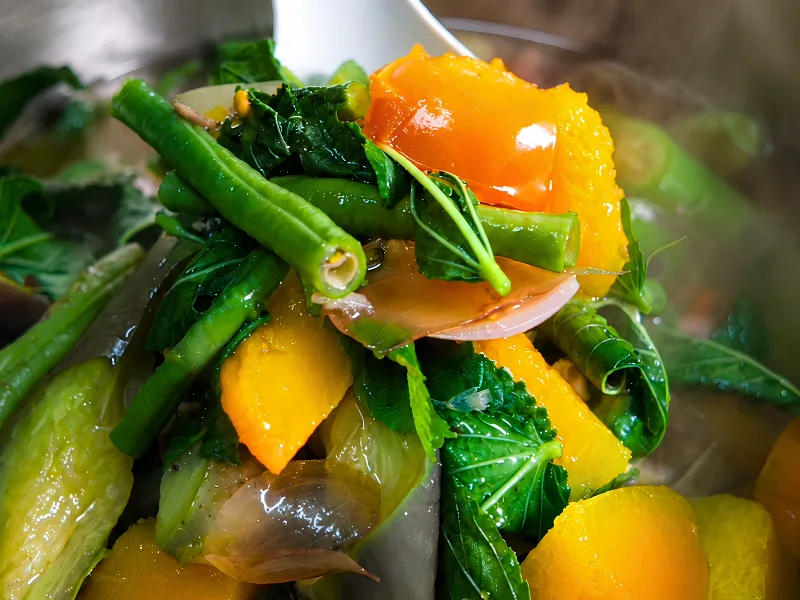
The quartered onion, fresh tomatoes, and alugbati do not need prolonged cooking. The heat held by the stew is enough to soften them while preserving some texture.
If you prefer the onion completely soft, add it a little earlier. Tougher substitute greens may also need a brief simmer.
Make the final seasoning adjustment late
The patis, optional pork cube, pork, and chicharon all contribute saltiness. The broth also becomes more concentrated as it simmers.
Taste a spoonful containing both broth and mung beans before adding more salt or patis.
Add the chicharon immediately before serving
Chicharon begins absorbing broth as soon as it touches the stew. Add it only when serving if you want it to retain some crunch.
Keep extra chicharon on the side so each person can add more to their bowl.