Laswa changes with what is available
The ingredient list is one combination rather than the only correct way to make laswa. In many homes, the vegetables depend on the season, what is growing nearby, or what looks good at the market that day.
When changing the vegetables, think about cooking time and texture. Firm squash and green papaya need a head start, while leafy vegetables and tender shoots belong closer to the end.
The broth should remain light
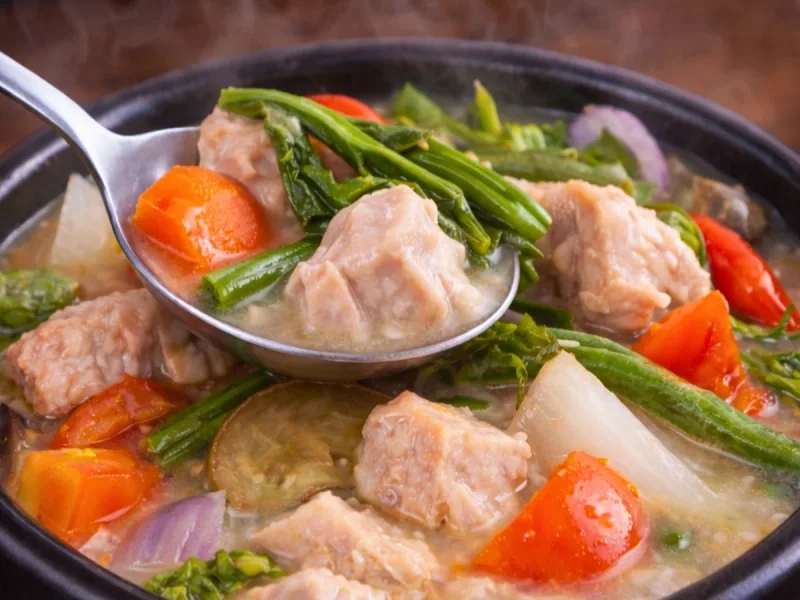
The ginamos or bagoong alamang and hibe are here to support the vegetables rather than overpower them. A good bowl should still let you taste the sweetness of the kalabasa, the slight earthiness of the talong, and the character of the leafy greens.
Taste the broth with a piece of vegetable, not only by itself. The seasoning may seem mild on a spoon but feel properly balanced once everything is eaten together.
A little body is part of the dish
Okra and saluyot release natural thickeners as they cook. Some kalabasa may also soften into the broth. This gives laswa a lightly silky texture without making it heavy.
Stir gently once the tender vegetables are in the pot. Too much mixing can break down the kalabasa and talong and make the broth thicker than intended.
Keep the vegetables distinct
Laswa is more enjoyable when the vegetables do not all have the same soft texture. The kalabasa should be tender, the sitaw should retain a little bite, and the leafy greens only need enough cooking to wilt.
Residual heat continues softening everything after the stove is turned off. If the pot will sit before serving, stop cooking while the vegetables still have a little more firmness than your final preference.
Let the ginamos guide the seasoning
Ginamos and bagoong alamang differ in flavor and saltiness. Raw ginamos has a stronger fermented-fish flavor, while the homemade ginisang bagoong I used is sweeter and more mellow.
Patis is optional and is not something you normally need in Ilonggo laswa. I added a little because my ginisang bagoong has a milder fish flavor. Taste the broth first, especially when using raw ginamos, because adding patis may make the soup too salty.
Taste the broth together with a piece of vegetable before making the final adjustment. Some batches may need a little salt, while others may need no additional seasoning at all.