Use a mixture of meat, fat, and skin
Sisig made only from lean lechon meat can become dry. Include some fat for richness and enough skin to provide crisp pieces.
Chop everything into small but distinct pieces. Chopping too finely can turn the mixture pasty instead of giving it varied texture.
Render before adding more oil
Start the lechon in the pan and watch how much fat it releases. Lechon belly may provide all the oil needed for sautéing.
Add the optional cooking oil only when the pan remains dry or the lechon is particularly lean.
Give the pork enough pan contact
Crisping requires direct contact with the hot surface. If the pan is crowded, the moisture released by the pork and onions can cause everything to steam.
Use a wide pan or work in batches when necessary. Stir occasionally rather than continuously so the edges have time to brown.
Use the onions in two ways
The cooked onions soften and become part of the savory base. The reserved raw onions provide freshness and crunch against the rich pork.
If you prefer a milder raw-onion flavor, rinse the reserved pieces briefly in cold water and drain them thoroughly before serving.
Cook the liver spread without scorching it
Stir the liver spread through the garlic and onions over moderate heat. It only needs enough time to warm through and lose its canned appearance.
Once it begins sticking to the pan, add the lechon rather than continuing to cook it alone.
Add calamansi near the end
Extended cooking dulls the fresh citrus aroma and may make the acidity taste less lively.
Add most of the juice after the pork has crisped, then serve additional calamansi on the side for individual adjustment.
Season after the lechon crisps
The saltiness becomes easier to judge once the lechon, liver spread, and liquid seasoning have been combined.
Taste before adding the listed salt. Depending on the original lechon seasoning, you may not need all of it.
Prepare the sizzling plate safely
Heat the plate gradually and place it on a stable heatproof board or trivet. Use thick oven mitts because the plate and handle become extremely hot.
Add the butter carefully because it may foam or splatter. Keep the plate away from children and allow it to cool fully before handling or washing.
Serve immediately for the best texture
The hot plate continues cooking the sisig after it leaves the stove. Transfer it only when everyone is ready to eat.
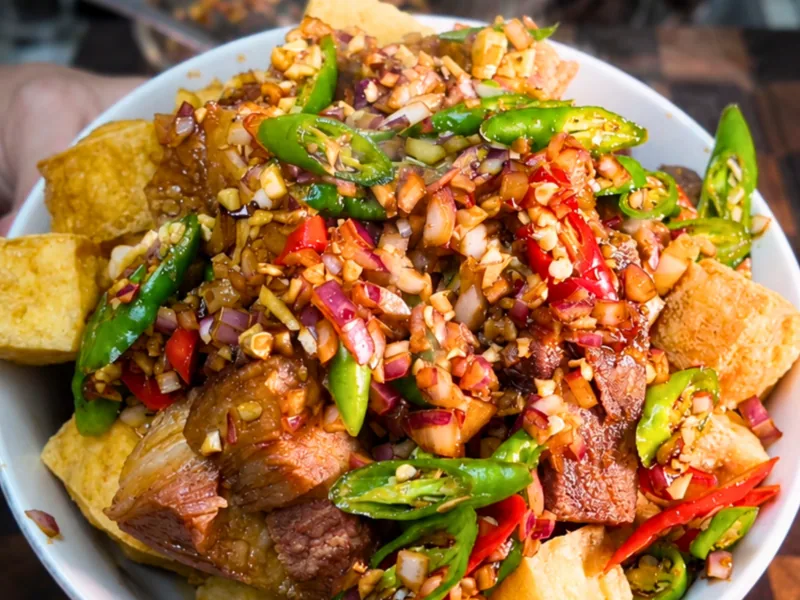
Add the fresh onions, chilies, calamansi, and crispy garlic immediately before serving so they retain their contrast.