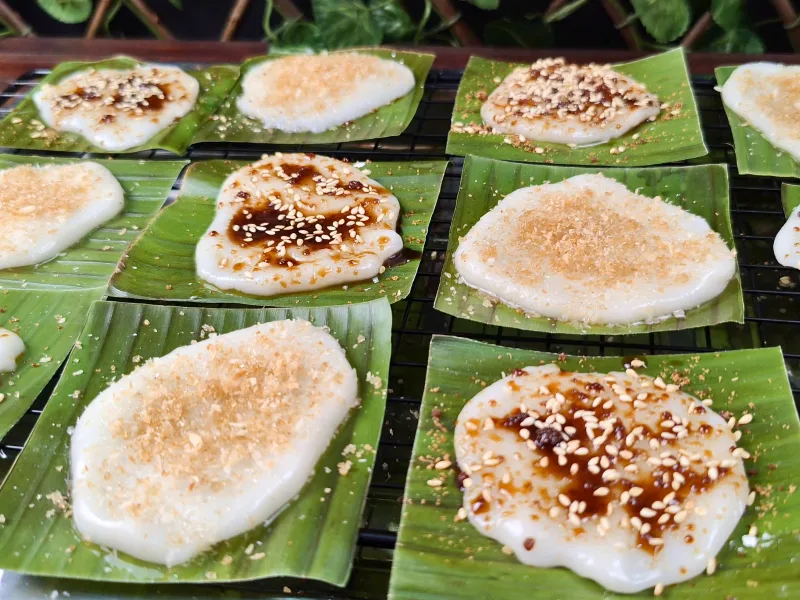
Easy Biko Two Ways
Watch the full recipe

See every step.

Play the complete Kubo Cooks video directly on this page.

Player not loading? Watch on YouTube ↗

Discover the dish

About Easy Biko Two Ways

Biko is a Filipino kakanin made by cooking glutinous rice with coconut milk or coconut cream and sugar until it becomes rich, sticky, and glossy.

It is commonly served as merienda or dessert and is closely associated with family gatherings, fiestas, holidays, and other occasions where food is meant to be shared. Different regions and households prepare it with varying levels of sweetness, color, and coconut richness.

This recipe begins by cooking the glutinous rice in a rice cooker with pandan. The cooked rice is then folded into coconut cream, brown sugar, and salt until it absorbs the mixture and develops the familiar chewy texture of biko.

A small amount of calamansi is added to balance the sweetness and richness. This is a personal addition rather than a traditional requirement, so it should be subtle enough that the finished biko does not taste sour.

One batch is divided into two versions. The first is topped with browned coconut curds, while the second receives a layer of coconut jam and a little latik. This makes it easy to offer two different finishes without preparing two separate batches of rice.

The Kubo Cooks method

Why This Recipe Works

Cooking the glutinous rice separately in a rice cooker simplifies the first stage and gives the grains time to absorb the water evenly.

The cooked rice is then finished in coconut cream and brown sugar. Folding it over heat allows the rice to absorb the sweet coconut mixture while excess moisture evaporates.

Salt prevents the sweetness from tasting flat and brings out the flavor of the coconut and pandan.

A small squeeze of calamansi adds enough acidity to cut through the richness without turning the biko into a citrus-flavored dessert.

Coconut cream contains enough fat to separate into browned curds and coconut oil when cooked patiently. The curds provide a toasted topping, while the reserved oil can be brushed over the biko for aroma and shine.

Dividing the finished biko only after the base is fully cooked keeps both versions consistent. One half receives the crisp, nutty latik curds, while the other gets a smooth and richer coconut-jam topping.

Ingredients for Easy Biko Two Ways
What to know

Ingredient Notes

Glutinous rice
Also called malagkit. It becomes sticky and chewy after cooking and cannot be replaced directly with ordinary white rice.
Water
Used to cook the glutinous rice before it is combined with the coconut mixture. Rice cookers may vary slightly, so check that the grains are fully cooked before continuing.
Pandan leaf
Adds a gentle floral aroma as the rice cooks. Tie or fold it so it is easy to remove afterward.
Coconut cream for the biko
Gives the rice its rich coconut flavor. It is thicker and higher in fat than regular coconut milk.
Brown sugar for the biko
Adds sweetness and a deeper color. The exact shade of the finished biko will depend on the kind of brown sugar used.
Salt
Balances the sweetness and brings out the coconut flavor. Mix it thoroughly so no salty pockets remain.
Calamansi
A small amount helps balance the richness. Add it gradually and stop before its flavor becomes obviously sour.
Coconut cream for the latik
Use full-fat coconut cream so there is enough fat to produce both browned curds and coconut oil. Here, latik refers to the browned coconut curds; the term can describe a syrupy coconut topping in some regions.
Coconut cream for the jam
Forms the rich base of the topping. It is cooked with brown sugar until smooth, glossy, and thick enough to spread.
Brown sugar for the coconut jam
Sweetens the topping and gives it a caramel-like color. The jam will thicken further as it cools.
Banana leaf
Optional, but it adds aroma and gives the biko a traditional presentation. Pass it briefly over a flame to make it flexible before using.
Make it your own

Substitutions

Glutinous rice
Another variety of white glutinous or sticky rice may be used. Ordinary long-grain or jasmine rice will not produce the same chewy texture.
Coconut cream for the biko
Full-fat coconut milk can be used, but the mixture may need additional cooking time to become thick.
Coconut cream for the latik
A rich, full-fat coconut cream gives the most reliable result. Regular coconut milk may produce fewer curds and require considerably more reduction.
Brown sugar
Use muscovado for a deeper molasses flavor and darker color. White sugar can be used, but the biko will be paler and have less caramel depth.
Pandan leaf
Leave it out when unavailable. A very small amount of vanilla may be used for a different aroma.
Calamansi
Leave it out for a more traditional flavor or use only a few drops of lemon juice.
Coconut jam topping
Skip it and use latik on both portions, or top one portion with another preferred coconut-based spread.
Rice cooker
Cook the glutinous rice in a covered pot over low heat. Watch it closely because sticky rice can catch on the bottom.
Easy Biko Two Ways process photo 1
Easy Biko Two Ways process photo 2
Easy Biko Two Ways process photo 3
Gallery photos 1–3 of 6
From my kitchen

Kubo Cooking Notes

Keep each portion of coconut cream separate

The coconut cream is divided among three different components: the biko base, the latik, and the coconut jam.

Measure each portion before cooking so the cream intended for one component is not accidentally used in another.

Use glutinous rice, not ordinary rice

Glutinous rice contains the starch needed to create biko’s sticky and chewy texture.

Regular white rice may absorb the coconut mixture, but it will not produce the same structure or mouthfeel.

Rinse without washing away everything

Rinse the rice until the water becomes mostly clear. It does not need to become completely transparent.

Handle the grains gently and drain them well before adding the measured cooking water.

Check the rice before adding it to the coconut mixture

The rice should already be soft and sticky when it leaves the rice cooker. The coconut mixture finishes and flavors it but should not be relied upon to cook hard grains fully.

If the rice is still firm, add a small amount of water and continue cooking it before moving to the next stage.

Make the latik patiently

Coconut cream goes through several stages before becoming latik. It first simmers, then releases oil, and finally forms curds that begin to brown.

Keep the heat at low to medium and stir more frequently once the curds appear.

Watch the latik closely near the end

The curds can change from pale gold to burnt very quickly.

Remove them when they are lightly golden because they will continue darkening slightly in the hot coconut oil.

Reserve the coconut oil

The oil released while making latik carries a strong toasted coconut aroma.

Use a small amount to brush the serving plate, banana leaf, or surface of the biko. Avoid adding so much that the dessert becomes greasy.

Fold the rice while it is still warm

Warm rice absorbs the sweet coconut mixture more easily and is simpler to distribute evenly.

Use a broad spatula and fold from the bottom so the mixture does not scorch while the rice thickens.

Look for a thick and glossy texture

The biko is ready when it becomes cohesive, glossy, and noticeably more difficult to fold.

Dragging the spatula across the bottom should leave a trail that does not immediately fill with loose liquid.

Add the calamansi gradually

Begin with a small squeeze, mix thoroughly, and taste before adding more.

Its purpose is to balance the richness, not to give the biko a distinct sour or citrus flavor.

Remember that coconut jam thickens as it cools

Remove the jam from the heat while it is still spreadable.

If it is cooked until extremely thick in the pan, it may become difficult to spread after cooling.

Divide the biko before adding the toppings

Spread the two portions into their trays while the biko is still warm and easy to shape.

Add the latik and coconut jam only after each portion has been arranged evenly.

Allow the biko to set before slicing

Freshly cooked biko is very soft and sticky.

Let it cool until it becomes easier to cut into clean portions. Lightly oiling the knife with reserved coconut oil can also help prevent sticking.

Plan ahead

Make-Ahead, Storage, and Reheating

Make ahead: The latik and coconut jam can be prepared ahead and refrigerated separately in covered containers. Warm the coconut jam gently until spreadable before assembling. Cook the rice and finish the biko closer to serving for the best texture.

Store leftovers: Transfer leftover biko to a covered container or cover the trays tightly and refrigerate once cool enough to handle. Consume within 3–4 days. The rice will become firmer when chilled because its starches tighten as it cools.

Freeze: Biko can be frozen in individual portions for easier storage and reheating. Wrap each piece well and place the portions in a freezer-safe covered container. Consume within 1–2 months for the best texture. The coconut-jam version may appear slightly separated after thawing but can still be gently reheated.

Reheat: Reheat individual portions in a microwave with a loose cover and a few drops of water or coconut milk to restore moisture. Biko can also be gently steamed until soft and warm. Add fresh latik after reheating when you want the topping to remain crisp.

Bring it to the table

Serving Suggestions

  • Serve slightly warm or at room temperature.
  • Present it on a prepared banana leaf for additional aroma.
  • Offer both versions together so guests can choose between latik and coconut jam.
  • Pair it with hot coffee, tea, or tablea.
  • Serve it as merienda or as part of a larger kakanin spread.
  • Add a little extra latik immediately before serving.
  • Brush the surface lightly with reserved coconut oil for shine and aroma.
  • Cut it into smaller pieces when serving it alongside several other desserts.

Ingredients

For Cooking the Glutinous Rice

  • 400 g glutinous rice, about 2 cups
  • 500 ml water
  • 1 pandan leaf

For the Biko Mixture

  • 400 ml coconut cream
  • 130 g brown sugar
  • 1 tsp salt
  • Juice of 1 to 2 calamansi

For the Latik

  • 200 ml coconut cream

For the Coconut Jam

  • 200 ml coconut cream
  • 100 g brown sugar

For Serving

  • Banana leaf, optional

Special Equipment

  • Rice cooker

How to Make It

Cooking the Glutinous Rice

  1. Rinse the glutinous rice until the water runs mostly clear.
  2. Add the rice, water, and pandan leaf to a rice cooker, then cook until the rice is soft and sticky.
  3. Remove the pandan leaf once done.

Making the Latik

  1. Pour the coconut cream into a pan and cook over low to medium heat, stirring occasionally, until the oil separates and light golden coconut curds form.
  2. Remove the latik and set aside. Reserve the coconut oil for brushing or finishing the biko.

Cooking the Biko

  1. In a large non-stick pan, combine the coconut cream and brown sugar. Cook over medium heat until the sugar dissolves.
  2. Add the cooked glutinous rice and fold continuously until well combined.
  3. Continue cooking until the mixture becomes thick, glossy, and slightly darker in color.
  4. Add a small squeeze of calamansi to balance the sweetness, then mix well and taste before adding more.
  5. Divide the cooked biko into two equal portions.

Making the Coconut Jam

  1. Combine the coconut cream and brown sugar in a small pan.
  2. Cook over low heat, stirring occasionally, for 15 to 20 minutes or until thick, smooth, and glossy.
  3. Let the coconut jam cool slightly while it is still spreadable.

Assembling the Two Versions

  1. For the classic version, spread one portion of biko onto a small tray, serving plate, or prepared banana leaf and top with latik.
  2. For the coconut jam version, spread the remaining biko onto another small tray or plate, cover with coconut jam, and finish with a little latik.
  3. Let the biko cool until set enough to slice cleanly.
Kubo Tips
  • Use coconut cream instead of coconut milk when making latik so there is enough fat to produce coconut curds and oil.
  • Cook the latik over low to medium heat and watch it closely once the curds begin to brown.
  • Reserve the coconut oil from the latik and brush a little over the biko for extra aroma and shine.
  • Add only a small amount of calamansi so it balances the richness without making the biko taste sour.
  • Pass the banana leaf briefly over a flame to soften it and release its aroma before plating.