Muasi (Ilonggo Palitaw)
Watch the full recipe

See every step.

Play the complete Kubo Cooks video directly on this page.

Player not loading? Watch on YouTube ↗

Discover the dish

About Muasi (Ilonggo Palitaw)

Muasi is an Ilonggo rice cake closely related to palitaw. It is made from glutinous rice flour and water, shaped into flat pieces, and boiled until the cakes rise to the surface.

The Tagalog name palitaw refers to this floating action during cooking. In Iloilo, this type of chewy rice cake is commonly known as muasi, although names and preparations can vary between towns and households.

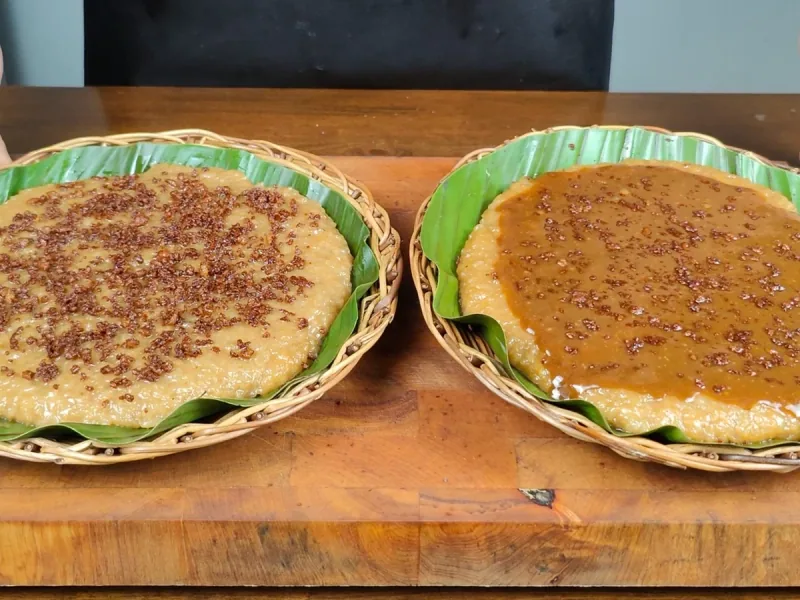
This version is served two ways. One uses dark muscovado sugar with toasted sesame seeds, while the other combines toasted desiccated coconut with washed sugar or light brown sugar. Serving each piece on banana leaf adds aroma and gives the simple rice cake a familiar local presentation.

The Kubo Cooks method

Why This Recipe Works

Glutinous rice flour forms an elastic dough using only water. Adding the water gradually makes it easier to reach the correct consistency without creating an overly wet and sticky mixture.

Flattening the portions allows the heat to reach the center more evenly. As the rice cakes cook, trapped steam and changes in the starch cause them to rise to the surface, providing a convenient visual cue.

The two toppings give the same batch contrasting flavors. Muscovado contributes a deeper molasses-like sweetness that pairs well with nutty sesame seeds. The toasted coconut mixture is lighter, with a familiar coconut aroma and gentler sweetness.

Placing the Muasi on individual banana-leaf pieces prevents them from sticking directly to the serving tray while also making them easier to pick up and share.

What to know

Ingredient Notes

Glutinous rice flour
This is also sold as sticky rice flour or sweet rice flour. Ordinary rice flour cannot be used as a direct substitute because it will not produce the same chewy texture.
Water
The exact amount varies depending on the flour and humidity. Add it gradually instead of pouring everything in at once.
Muscovado sugar
Gives one topping its dark color and deeper caramel or molasses flavor. Break apart any firm clumps before serving.
Sesame seeds
Toasting brings out their aroma and nutty flavor. They can burn quickly, so keep them moving in the pan.
Desiccated coconut
Toast until lightly golden rather than dark brown. It continues to brown briefly after leaving the heat.
Washed or light brown sugar
Adds a lighter sweetness to the toasted coconut topping.
Banana leaves
Optional, but they add aroma and provide a practical individual surface for the warm, sticky rice cakes.
Make it your own

Substitutions

Glutinous rice flour
Freshly prepared galapong from soaked and ground glutinous rice may be used, but its moisture level will differ and the water must be adjusted.
Muscovado sugar
Use dark brown sugar for a similar deep sweetness, although the flavor will be milder.
Washed sugar
Light brown sugar or white sugar can be used.
Desiccated coconut
Freshly grated mature coconut is an excellent alternative and gives a softer, more traditional coconut texture. Fresh coconut should be consumed sooner.
Sesame seeds
Black sesame seeds may be used, or the sesame can be omitted.
Banana leaves
Serve the Muasi on a regular plate or parchment paper if banana leaves are unavailable.
Muasi (Ilonggo Palitaw) process photo 1
Muasi (Ilonggo Palitaw) process photo 2
Muasi (Ilonggo Palitaw) process photo 3
Gallery photos 1–3 of 6
From my kitchen

Kubo Cooking Notes

Add water slowly

It is much easier to add more water to a dry dough than to correct one that has become too wet. Begin with a smaller amount, mix thoroughly, and add another small splash only when dry flour remains.

Check the dough by shaping one piece

Roll and flatten a test portion before shaping the entire batch. The edges should remain mostly smooth. Cracking means the dough needs a little more water, while excessive sticking means it is too wet.

Keep the pieces evenly thick

A very thick center can remain dense after the outside has cooked. Flatten each portion evenly without making it so thin that it tears while boiling.

Do not crowd the pot

Give the pieces room to move and rise independently. Adding too many at once lowers the water temperature and makes the cakes more likely to stick together.

Use floating as the visual cue

The Muasi will initially settle below the surface before rising as it cooks. Once a piece floats and appears evenly firm, lift it out and allow the excess water to drain.

Toast with residual heat in mind

Sesame seeds and coconut can go from golden to burnt quickly. Transfer them out of the hot pan as soon as they reach the desired color.

Top the Muasi shortly before serving

Sugar draws moisture from the rice cakes and coconut. Keeping the toppings separate until shortly before serving gives the best texture and presentation.

Plan ahead

Make-Ahead, Storage, and Reheating

Plan ahead: The sesame seeds, coconut, and sugar mixtures can be prepared ahead and kept in separate airtight containers at room temperature. The dough is best mixed, shaped, and cooked on the day it will be served. Keep shaped uncooked pieces covered so their surfaces do not dry out while the water heats.

Storage: Muasi has its softest texture on the day it is cooked. Store leftover rice cakes and toppings separately when possible. Arrange the rice cakes in a covered container with banana leaf or parchment between layers to reduce sticking. Refrigerate and consume within two days. Fresh coconut should always be refrigerated and consumed promptly. Freezing is not recommended because the rice cakes can develop an uneven or firmer texture after thawing.

Reheating: Steam refrigerated Muasi briefly until soft and warm. It can also be microwaved under a loose cover with a few drops of water. Heat in short intervals to avoid making the edges tough. Add the toppings after reheating.

Bring it to the table

Serving Suggestions

  • Serve freshly cooked while the Muasi is still soft and warm.
  • Offer both topping styles together so everyone can try each version.
  • Present the pieces individually on banana leaves.
  • Serve as merienda or a light dessert.
  • Pair with hot coffee, tea, or tablea.
  • Place extra muscovado, sesame seeds, and toasted coconut mixture on the table.

Ingredients

For the Muasi

  • 250 g glutinous rice flour, about 2 cups
  • Water, as needed

For the Muscovado and Sesame Topping

  • 3 Tbsp muscovado sugar
  • 2 Tbsp sesame seeds

For the Coconut and Brown Sugar Topping

  • 3 Tbsp desiccated coconut
  • 3 Tbsp washed sugar or light brown sugar

For Serving

  • Banana leaves, for serving (optional)

How to Make It

Prepare the Muasi

  1. If using banana leaves, wipe them clean and cut them into individual serving pieces.
  2. Place the glutinous rice flour in a mixing bowl.
  3. Add water gradually while mixing by hand. Continue until the flour comes together into a soft, smooth dough that holds its shape without feeling runny.
  4. Divide the dough into about 15 portions.
  5. Roll each portion into a ball, then flatten it gently between your palms.

Cook the Muasi

  1. Bring a pot of water to a steady boil.
  2. Carefully lower the flattened rice cakes into the water in batches. Avoid crowding the pot.
  3. Cook until the pieces rise and float to the surface.
  4. Lift them out with a slotted spoon, allow the excess water to drain, and place each piece on a prepared banana leaf or serving plate.

Prepare the Toppings

  1. Toast the sesame seeds in a dry pan over low to medium heat until lightly golden and aromatic. Transfer them immediately to a bowl.
  2. In the same dry pan, toast the desiccated coconut until lightly golden.
  3. Add the washed sugar or light brown sugar to the toasted coconut. Stir briefly until evenly combined, then transfer the mixture to a bowl.
  4. Top half of the warm Muasi with muscovado sugar and toasted sesame seeds.
  5. Top the remaining pieces with the toasted coconut and brown sugar mixture.
  6. Serve while soft and freshly cooked.
Kubo Tips
  • Add the water gradually because different brands of glutinous rice flour absorb different amounts.
  • The finished dough should feel soft and pliable. If it cracks while shaping, add water a little at a time. If it becomes sticky and difficult to handle, work in a small amount of glutinous rice flour.
  • Make the pieces roughly equal in size and thickness so they cook at the same rate.
  • Cook the Muasi in batches to prevent the pieces from sticking together.
  • Keep the water at a steady boil, but not so aggressive that it damages the shape of the rice cakes.
  • Remove the sesame seeds and coconut from the pan as soon as they are toasted. Residual heat can continue browning them.
  • Add the toppings while the Muasi is still warm so the sugar softens slightly against the surface.