Brown the vegetables without fully cooking them
The potatoes and carrots only need light browning during the first fry. They will finish cooking after they return to the curry. Cooking them completely at this stage can make them too soft later.
Give the chicken room to sear
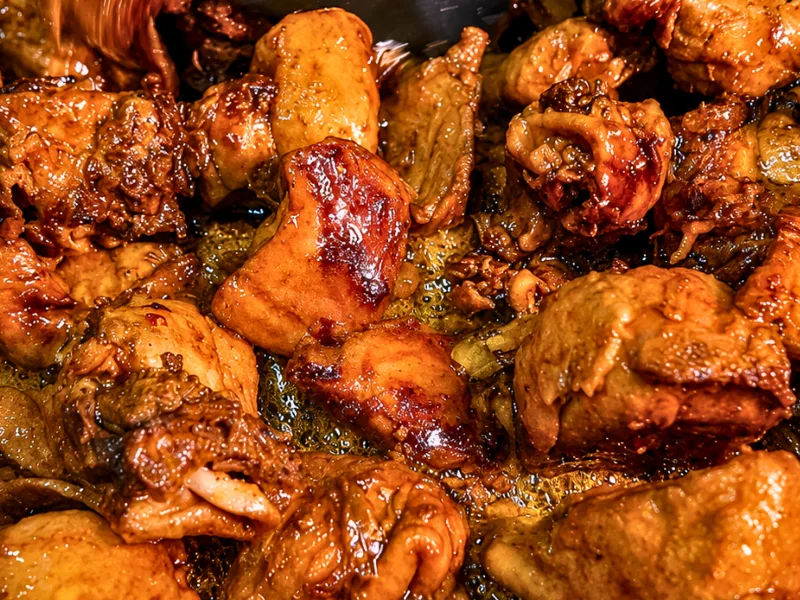
Avoid overcrowding the pan. If necessary, brown the chicken in batches so moisture can evaporate and the pieces can develop color instead of steaming.
Do not burn the aromatics or curry powder
Ginger, garlic, onion, and ground spices can become bitter when scorched. Adjust the heat as needed and keep everything moving before adding the water.
Curry powders are not all the same
Some blends are mild and turmeric-forward, while others are stronger, hotter, or more aromatic. Use the listed amount as the starting point and make any adjustment after the sauce has simmered.
Keep the coconut milk at a gentle simmer
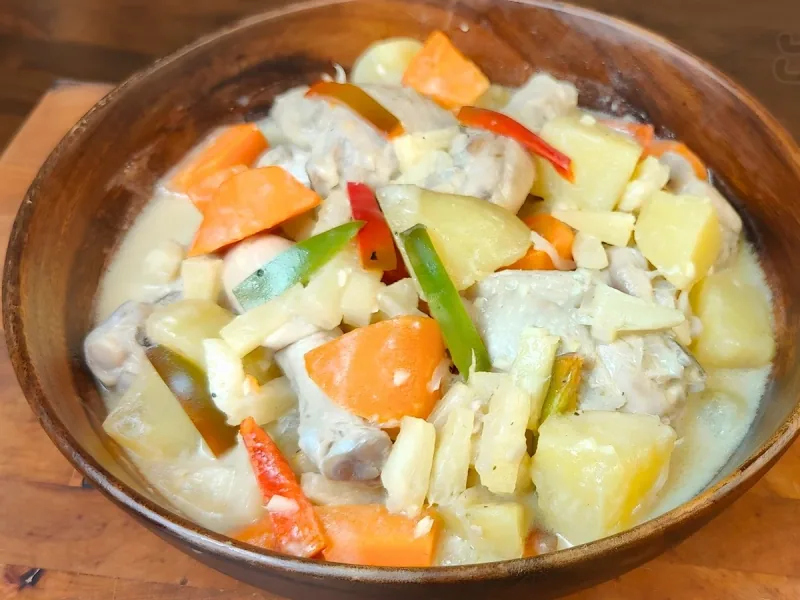
Once the coconut milk is added, avoid a hard, rolling boil. Gentle heat helps the sauce remain creamy and reduces the chance of excessive separation.
Add the bell peppers near the end
Bell peppers soften quickly. Adding them during the final stage allows them to cook through while retaining some color and texture.
Adjust the thickness last
The potatoes, coconut milk, and natural reduction already help thicken the curry. Wait until the chicken and vegetables are cooked before deciding whether the cornstarch slurry is necessary.
Taste after the sauce reduces
Chicken powder, curry powder, and salt become more concentrated as the sauce cooks down. Make the final salt, pepper, and sugar adjustments only after reaching the consistency you want.