Visayan-Inspired Chicken Adobo
Watch the full recipe

See every step.

Play the complete Kubo Cooks video directly on this page.

Player not loading? Watch on YouTube ↗

Discover the dish

About Visayan-Inspired Chicken Adobo

Filipino adobo is not one fixed recipe. Different regions and households have their own balance of vinegar, soy sauce, garlic, spices, and ingredients that reflect what is familiar locally.

This version is inspired especially by the adobo I grew up eating here in Iloilo. Ginger is a common addition to adobo in many Ilonggo homes, including ours. Annatto, or atsuete, is also used in some local versions to give the adobo its warm orange-red color.

The way annatto is extracted can vary between households. Some gently infuse the seeds directly in cooking oil, while others soak them in warm or hot water and add the strained annatto water to the adobo. This recipe uses the oil-infusion method.

Coconut vinegar gives the sauce a slightly smoother tang, while two preparations of garlic build flavor in different ways. Minced garlic is sautéed with the onion and ginger, while lightly crushed cloves with their skins still on simmer in the sauce.

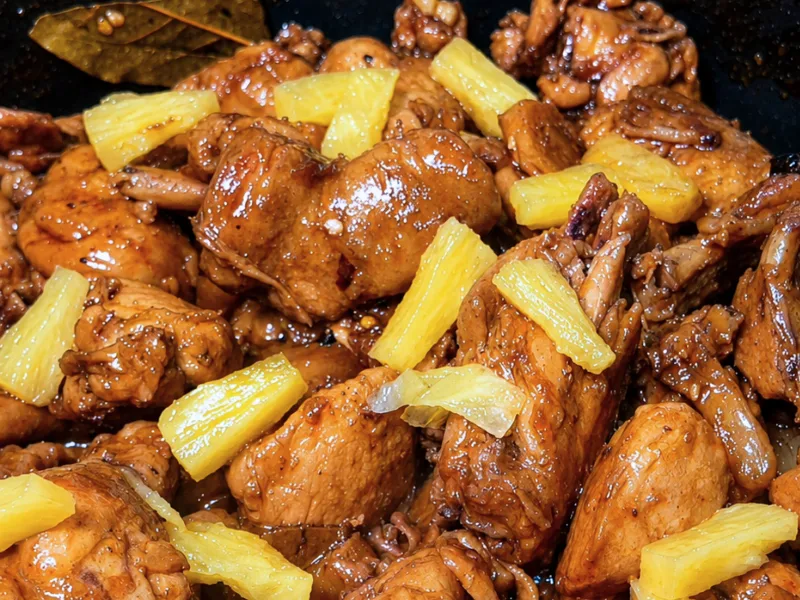
The result is a savory and tangy chicken adobo with warm aromatics, a richly colored sauce, and just enough sweetness and heat if you choose to add them.

The Kubo Cooks method

Why This Recipe Works

Gently heating the annatto seeds directly in the oil draws out their color and creates the orange-red cooking base used throughout the recipe. The seeds are removed before they become too dark, preventing them from burning as the cooking continues.

Sautéing the minced garlic, onion, and ginger in the infused oil spreads those aromatics throughout the sauce. Browning the chicken afterward adds another layer of flavor before the braising liquid is introduced.

Chicken naturally releases liquid as it cooks, so water is added only as needed. This prevents the adobo from becoming unnecessarily diluted while still providing enough moisture for the chicken to become tender.

Soy sauce, bay leaves, peppercorns, and the second addition of crushed garlic season the chicken as it simmers. Coconut vinegar goes in later, allowing its tang to remain noticeable while the uncovered simmer removes its raw sharpness.

Reducing the sauce at the end concentrates everything. The optional sugar, chilies, salt, and ground pepper can then be adjusted according to how salty, tangy, sweet, or spicy you want the finished adobo.

What to know

Ingredient Notes

Chicken
Bone-in pieces are ideal because they remain juicy while simmering and contribute more flavor to the sauce. Use similarly sized pieces so they finish cooking at roughly the same time.
Annatto seeds or atsuete
Gives the adobo its orange-red color. Some households gently infuse the seeds directly in oil, as done in this recipe. Others soak them in warm or hot water, strain the colored liquid, and add it to the adobo. When using oil, keep the heat low and remove the seeds before they darken or burn.
Cooking oil
A neutral cooking oil allows the annatto color to stand out. Only enough is needed to infuse the seeds and sauté the aromatics.
Garlic
Minced garlic forms part of the sautéed base. The additional crushed cloves simmer with their skins on, giving the sauce a deeper, more rustic garlic aroma.
Onion
Softens into the sauce and provides a little natural sweetness.
Ginger
Adds warmth and aroma. Ginger is a familiar addition to adobo here in Iloilo and was also present in the adobo I grew up eating.
Soy sauce
Provides saltiness, color, and savory flavor. Brands vary considerably, so make the final seasoning adjustment only after the sauce has reduced.
Coconut vinegar
Gives the adobo its acidity with a slightly smoother character than some sharper vinegars. Its strength can still vary by brand.
Water
Add only as much as the chicken needs. Some batches release plenty of liquid and may require very little additional water.
Chicken broth cube
Optional, but it can give the sauce more savory depth. Remember that it also contributes salt.
Bay leaves and peppercorns
Give the sauce its familiar adobo aroma and gentle peppery warmth.
Sugar
Optional. It can soften the sharp edges of the vinegar, but the adobo does not need to become noticeably sweet.
Fresh chilies or chili flakes
Optional for heat. Fresh red or green chilies, or a combination of both, may be used.
Salt and ground black pepper
Add these only after reducing and tasting the sauce. The soy sauce and optional broth cube may already provide enough saltiness.
Make it your own

Substitutions

Chicken pieces
Use drumsticks, thighs, wings, or a mixture. Boneless chicken can also be used, but it will generally cook faster and may not give the sauce as much richness. You can also substitute the chicken with pork. Use pork shoulder or pork belly cut into serving pieces. Pork generally needs a longer simmer, so add water as needed and cook it until tender before reducing the sauce.
Oil-infused annatto
For the water method, soak the seeds in warm or hot water until the liquid develops a strong orange-red color. Strain the liquid and use it as part of the water added to the adobo. Use regular cooking oil for sautéing.
Annatto seeds
Prepared annatto oil may also be used. If no form of annatto is available, regular cooking oil will still work, although the adobo will not have the same orange-red color.
Coconut vinegar
Cane vinegar is the closest easy substitute. White vinegar may also be used, but it can taste sharper, so allow it to simmer properly before making the final adjustment.
Regular soy sauce
Lower-sodium soy sauce can be used, although the final color and seasoning may differ. Taste the reduced sauce before adding salt.
Chicken broth cube
Leave it out or replace some of the water with unsalted chicken broth. Add the broth gradually so the sauce does not become too thin.
Fresh chilies
Use red chilies, green chilies, a combination of both, or chili flakes. They may also be omitted completely.
Sugar
Brown or white sugar both work. You can also leave it out for a more strongly salty and tangy adobo.
Skin-on garlic
The additional cloves can be peeled if preferred. The flavor will still work, although it will lose some of the rustic aroma associated with the skin-on garlic.
Visayan-Inspired Chicken Adobo process photo 1
Visayan-Inspired Chicken Adobo process photo 2
Visayan-Inspired Chicken Adobo process photo 3
Gallery photos 1–3 of 6
From my kitchen

Kubo Cooking Notes

Two ways to extract the annatto

Ilonggo households may prepare annatto in different ways. Some gently heat the seeds directly in cooking oil, while others soak them in warm or hot water and add the strained annatto water to the adobo.

This recipe uses the oil method. Keep the heat low and remove the seeds once the oil develops a strong orange-red color. Allowing the seeds to become too dark can introduce a bitter flavor.

Give the chicken room to brown

Browning works best when the chicken pieces have direct contact with the pot. If they are packed too tightly, the moisture they release can cause them to steam instead.

A crowded pot does not ruin the recipe, but the chicken will develop less color. Brown it in batches when necessary, especially when using a smaller pot.

Let the chicken determine the water

The listed water is a range because different chicken pieces release different amounts of liquid. Adding the full amount automatically can leave the sauce thin and require a much longer reduction.

Check the liquid already in the pot first. Add only enough water to let the chicken simmer comfortably without drying out or catching on the bottom.

Two preparations of garlic serve different purposes

The minced garlic cooked with the aromatics becomes mellow and spreads throughout the sauce. The lightly crushed skin-on cloves hold together as they simmer and contribute a deeper garlic aroma.

Make sure the skins are clean, and remove any loose pieces before serving if desired.

Let the vinegar lose its raw edge

Freshly added vinegar can smell and taste especially sharp. Giving it time to return to a steady simmer allows that harsh edge to mellow while preserving the tang that defines the adobo.

Judge the balance after the sauce has simmered and reduced. Tasting too early can lead to unnecessary sugar or salt being added.

Make the final adjustment after reducing

Soy sauce, vinegar, the optional broth cube, and the chicken juices become more concentrated as the sauce reduces.

Wait until the sauce is close to your preferred consistency before deciding whether it needs sugar, salt, pepper, or additional water.

Plan ahead

Make-Ahead, Storage, and Reheating

Make ahead: This chicken adobo can be cooked a day ahead. Resting it overnight gives the chicken and sauce more time to exchange flavors, which is why adobo often tastes even better the following day. The finished dish is a better make-ahead option than storing the chopped onion, garlic, and ginger for an extended period. Prepare those aromatics when you are ready to cook.

Store leftovers: Transfer the chicken and sauce to a covered container and refrigerate once cool enough to handle. Consume within 3–4 days. Keep the chicken covered with some of the sauce to help prevent it from drying out.

Freeze: Chicken adobo can also be frozen in a suitable covered container. Include enough sauce to surround the chicken and leave a little room for expansion. Thaw it safely in the refrigerator before reheating. The sauce may appear slightly separated at first but should come back together as it warms.

Reheat: Reheat the chicken gently with its sauce until thoroughly hot. Turn the pieces occasionally so they heat evenly. If the sauce has become too thick, add a small splash of water. Avoid prolonged boiling once the chicken is hot because it can make the meat dry.

Bring it to the table

Serving Suggestions

  • Serve with plenty of hot steamed rice and spoon some of the reduced sauce over the top.
  • Pair it with sliced tomatoes and cucumber for a fresh contrast.
  • Serve with atchara to balance the rich, salty, and tangy sauce.
  • Add a fried egg for a more filling breakfast or lunch.
  • Offer extra chilies on the side for anyone who prefers more heat.

Ingredients

  • 2 Tbsp cooking oil
  • 2 Tbsp annatto seeds or atsuete (about 15 g)
  • 6 cloves garlic, minced (about 30 g)
  • 3 cloves garlic, crushed with skin on (about 15 g)
  • 1 medium onion, sliced (about 120 g)
  • 1 thumb-sized piece ginger, sliced (about 30 g)
  • 1 kg chicken, adobo cut
  • ⅓ cup soy sauce (80 ml)
  • ⅓ cup coconut vinegar (80 ml)
  • ½–1 cup water (120–240 ml), only as needed
  • 1 chicken broth cube (optional)
  • 3 bay leaves
  • 1 tsp whole peppercorns
  • ½ tsp ground black pepper, or to taste
  • 1–2 Tbsp sugar (optional)
  • 2 fresh chilies, sliced, or ½ tsp chili flakes (optional)
  • Salt, to taste (optional)

How to Make It

  1. Heat the cooking oil in a medium to large pot over low heat.
  2. Add the annatto seeds and gently cook until the oil develops a deep orange-red color.
  3. Remove the annatto seeds, leaving the infused oil in the pot.
  4. Add the minced garlic, sliced onion, and ginger. Sauté until fragrant and the onions begin to soften.
  5. Add the chicken and cook until the pieces develop a light golden-brown color.
  6. Add the soy sauce, crushed garlic with skin on, chicken broth cube (if using), bay leaves, fresh chilies or chili flakes (if using), and whole peppercorns.
  7. Stir well, then check how much liquid the chicken has released. Add ½–1 cup water only if needed.
  8. Cover and simmer over medium-low heat for 20–25 minutes, or until the chicken becomes tender.
  9. Pour in the vinegar and let the sauce return to a gentle simmer. Continue cooking before tasting and adjusting the balance.
  10. Add sugar, if desired, to balance the salty and tangy flavors.
  11. Continue simmering uncovered for 10–15 minutes, or until the sauce has reduced to your preferred consistency.
  12. Season with ground black pepper and adjust with salt if needed.
  13. Serve hot with steamed rice and enjoy!
Kubo Tips
  • Annatto can be infused directly in oil or soaked in warm or hot water. This recipe uses the oil method.
  • Keep the heat low and remove the annatto seeds before they darken or burn.
  • Give the chicken enough room in the pot so it can brown instead of steam.
  • Check how much liquid the chicken releases before adding water.
  • Let the vinegar simmer before tasting and adjusting the sauce.
  • Reduce the sauce first, then make the final salt, sugar, and pepper adjustment.
  • Cook the adobo a day ahead if you want the flavors to become even more developed.