Filipino Chicken Curry
Watch the full recipe

See every step.

Play the complete Kubo Cooks video directly on this page.

Player not loading? Watch on YouTube ↗

Discover the dish

About Filipino Chicken Curry

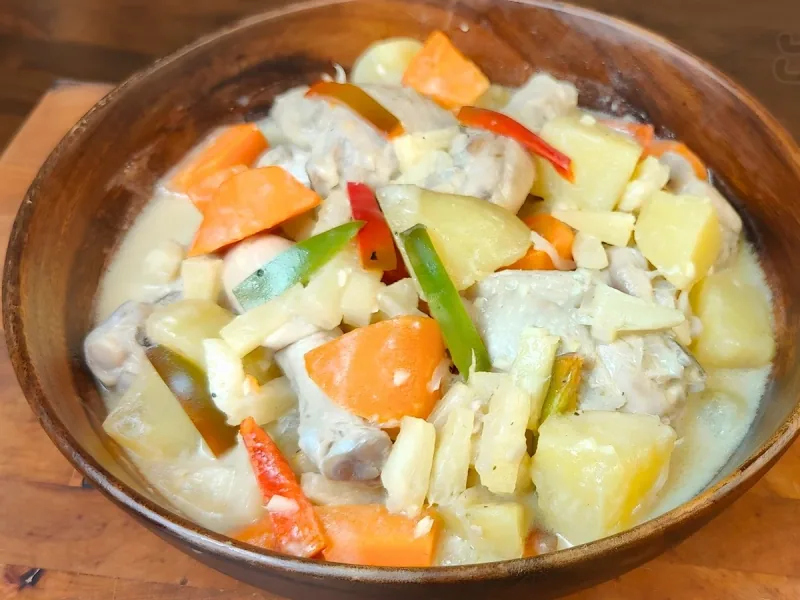
Filipino chicken curry is a local take on the many curry dishes found across Asia. It commonly combines chicken, curry powder, coconut milk, and familiar vegetables such as potatoes, carrots, and bell peppers.

Compared with many other curry styles, the Filipino version is generally mild, creamy, and made to be eaten with plenty of steamed rice. Recipes vary between households, with some using coconut milk, evaporated milk, or a combination of both.

This version uses coconut milk for a rich sauce, ginger for warmth, and turmeric for its earthy flavor and bright yellow color. Pan-frying the vegetables and searing the chicken before simmering adds more flavor while helping everything retain its shape.

The Kubo Cooks method

Why This Recipe Works

Pan-frying the potatoes and carrots first develops light browning on their surfaces. It also gives them a head start so they can finish cooking in the sauce without completely falling apart.

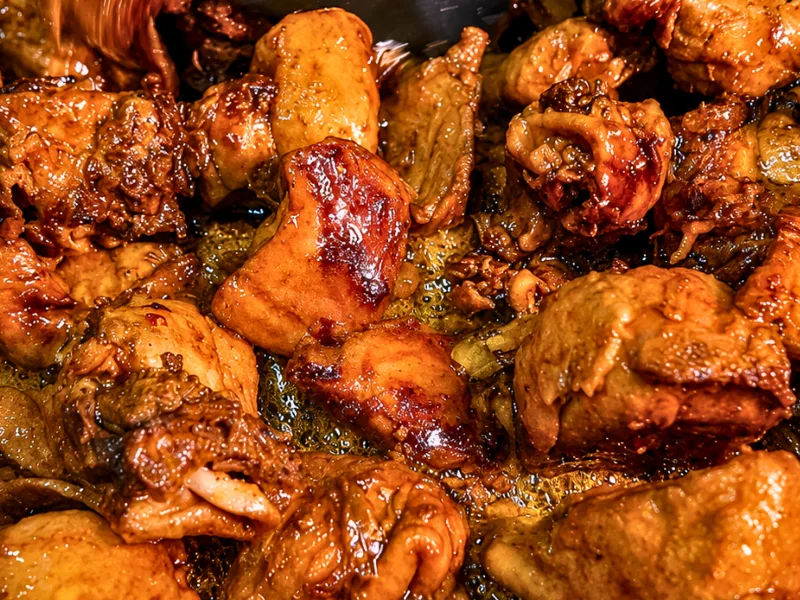
Searing the chicken in the same pan builds another layer of flavor and leaves browned bits behind. The ginger, garlic, and onion are then sautéed in that seasoned oil before the chicken and spices return to the pot.

The chicken initially simmers with water, curry powder, chicken powder, and bay leaves. This gives the meat time to become tender and creates a flavorful base before the coconut milk is added.

Adding the coconut milk later keeps it from cooking aggressively for the entire simmer. The bell peppers also go in near the end so they retain some texture and color.

The sauce naturally becomes thicker as it reduces. Cornstarch slurry remains optional for anyone who prefers a heavier sauce, while a little sugar can be used to balance the curry powder and coconut milk.

Ingredients for Filipino Chicken Curry
What to know

Ingredient Notes

Chicken
Use a whole chicken cut into serving pieces or a combination of your preferred cuts. Bone-in pieces contribute more flavor to the sauce, while boneless chicken cooks more quickly.
Potatoes
Cut them into evenly sized pieces so they finish cooking at roughly the same time. Pan-frying helps the outside hold together during simmering.
Carrots
These add sweetness and color. Keep the pieces similar in size to the potatoes for even cooking.
Bell peppers
Red and green peppers give the curry color, aroma, and a little sweetness. Add them near the end to keep them from becoming overly soft.
Coconut milk
Forms the creamy base of the sauce. Stir it well before measuring if the solids and liquid have separated in the package.
Ginger
Adds warmth and helps give Filipino-style chicken curry its familiar aromatic character.
Garlic and onion
These create the savory aromatic base beneath the curry powder and coconut milk.
Curry powder
Blends several spices into one seasoning. Strength and flavor vary between brands, so taste the finished sauce before adding more.
Turmeric powder
Deepens the yellow color and contributes a mild earthy flavor. It can stain utensils, clothing, and light-colored surfaces.
Chicken powder
Reinforces the savory chicken flavor. Check the seasoning near the end because different brands contain different amounts of salt.
Bay leaves
Add a subtle herbal aroma as the chicken simmers. Remove them before serving.
Cornstarch slurry
Optional for a thicker sauce. Stir it again immediately before adding because cornstarch quickly settles at the bottom.
Sugar
Optional. Use only enough to round out any bitterness from the spices rather than making the curry noticeably sweet.
Make it your own

Substitutions

Chicken
Boneless chicken thigh can be used for easier serving. Chicken breast also works but should not be overcooked. Pork shoulder is another option, although it will require a longer simmer to become tender.
Potatoes
Use sweet potato for a sweeter variation, or replace part of the potato with kalabasa. Softer vegetables should be added later so they do not break apart.
Carrots
Replace them with more potato, kalabasa, or another firm vegetable, or simply leave them out.
Bell peppers
Use any available color. Siling haba can be added when you want a gentler chili flavor, although it will not provide the same sweetness as bell pepper.
Coconut milk
Dilute coconut cream with water until it reaches a coconut-milk consistency. The sauce may still be slightly richer.
Water
Unsalted chicken broth may be used, but reduce the chicken powder and final salt accordingly.
Chicken powder
Use a chicken broth cube or season the curry with salt instead. Add it gradually because broth cubes vary in saltiness.
Cornstarch slurry
Leave it out and allow the sauce to reduce naturally.
Sugar
It can be omitted completely.
Filipino Chicken Curry process photo 1
Filipino Chicken Curry process photo 2
Filipino Chicken Curry process photo 3
Gallery photos 1–3 of 6
From my kitchen

Kubo Cooking Notes

Brown the vegetables without fully cooking them

The potatoes and carrots only need light browning during the first fry. They will finish cooking after they return to the curry. Cooking them completely at this stage can make them too soft later.

Give the chicken room to sear

Avoid overcrowding the pan. If necessary, brown the chicken in batches so moisture can evaporate and the pieces can develop color instead of steaming.

Do not burn the aromatics or curry powder

Ginger, garlic, onion, and ground spices can become bitter when scorched. Adjust the heat as needed and keep everything moving before adding the water.

Curry powders are not all the same

Some blends are mild and turmeric-forward, while others are stronger, hotter, or more aromatic. Use the listed amount as the starting point and make any adjustment after the sauce has simmered.

Keep the coconut milk at a gentle simmer

Once the coconut milk is added, avoid a hard, rolling boil. Gentle heat helps the sauce remain creamy and reduces the chance of excessive separation.

Add the bell peppers near the end

Bell peppers soften quickly. Adding them during the final stage allows them to cook through while retaining some color and texture.

Adjust the thickness last

The potatoes, coconut milk, and natural reduction already help thicken the curry. Wait until the chicken and vegetables are cooked before deciding whether the cornstarch slurry is necessary.

Taste after the sauce reduces

Chicken powder, curry powder, and salt become more concentrated as the sauce cooks down. Make the final salt, pepper, and sugar adjustments only after reaching the consistency you want.

Plan ahead

Make-Ahead, Storage, and Reheating

Plan ahead: Chicken curry can be cooked a day before serving, and its flavors often become more blended as it rests. Cook the vegetables only until tender so they do not become too soft when reheated. The curry will thicken in the refrigerator. Keep a little water or coconut milk ready for loosening the sauce during reheating.

Storage: Transfer leftovers to covered containers once cooled enough to store safely. Refrigerate and consume within 3–4 days. If possible, avoid repeatedly reheating the whole batch. Remove and heat only the amount you plan to serve.

Freeze: Filipino chicken curry can be frozen in a covered freezer-safe container and consumed within 2–3 months for the best quality. The potatoes and carrots may become softer after thawing, and the coconut sauce may initially look separated. Thaw overnight in the refrigerator and stir the sauce gently while reheating.

Reheating: Warm the curry over low to medium heat, stirring occasionally. Add a small amount of water or coconut milk if the sauce has become too thick. Heat until the chicken and sauce are thoroughly hot. Avoid boiling it aggressively, especially after adding extra coconut milk.

Bring it to the table

Serving Suggestions

  • Serve hot with freshly steamed rice.
  • Spoon plenty of coconut curry sauce over the rice.
  • Offer sliced siling haba or fresh chilies on the side for anyone who wants more heat.
  • Pair it with a simple cucumber or tomato salad to balance the rich sauce.
  • Serve with pandesal or another soft bread for soaking up the remaining sauce.
  • Remove the bay leaves before portioning the curry.

Ingredients

  • 1 kg chicken, cut into serving pieces
  • 400 g potatoes (about 2 medium), peeled and cut into bite-sized pieces
  • 300 g carrots (about 2 medium), peeled and cut into bite-sized pieces
  • 250 g bell peppers (about 2–3 medium), sliced
  • 600 ml coconut milk
  • 500 ml water
  • 25 g ginger (about 1 thumb-sized piece), sliced
  • 15 g garlic (about 4 cloves), minced
  • 20 g onion (about ¼ medium onion), sliced
  • 1½ Tbsp curry powder
  • 1 Tbsp turmeric powder
  • 2 tsp chicken powder
  • 2 bay leaves
  • Salt, to taste
  • Black pepper, to taste
  • 4 Tbsp cooking oil
  • 2 Tbsp cornstarch mixed with 2 Tbsp water (optional, for thickening)
  • Sugar, to taste (optional)

How to Make It

  1. Cut the chicken into serving pieces.
  2. Peel the potatoes and carrots, then cut them into bite-sized pieces.
  3. Slice the bell peppers, onion, ginger, and garlic.
  4. Heat the cooking oil in a large pan or pot over medium heat.
  5. Pan-fry the potatoes and carrots until lightly browned, then remove and set aside.
  6. In the same pan, sear the chicken pieces until lightly browned on all sides, then remove and set aside.
  7. Sauté the ginger, garlic, and onion until fragrant and softened.
  8. Return the chicken to the pan.
  9. Add the curry powder, chicken powder, salt, and black pepper, then stir until the chicken is evenly coated.
  10. Pour in the water and add the bay leaves.
  11. Cover and simmer over low to medium heat for 20–30 minutes, or until the chicken is nearly tender.
  12. Pour in the coconut milk and stir gently to combine.
  13. Return the potatoes and carrots to the pan.
  14. Add the bell peppers and turmeric powder, then mix until evenly combined.
  15. Continue simmering uncovered until the chicken and vegetables are fully cooked and the sauce has slightly reduced.
  16. For a thicker sauce, gradually stir in the cornstarch slurry and simmer until the desired consistency is reached.
  17. Season with additional salt, black pepper, and sugar, if using.
Kubo Tips
  • Pan-frying the potatoes and carrots first helps them hold their shape and adds extra flavor.
  • Searing the chicken before simmering gives the curry a richer, deeper taste.
  • Simmer the curry gently after adding the coconut milk to keep the sauce smooth and creamy.
  • Add the bell peppers near the end of cooking so they stay slightly crisp and vibrant.
  • Use the cornstarch slurry only if you prefer a thicker curry, as reducing the sauce naturally also thickens it.